
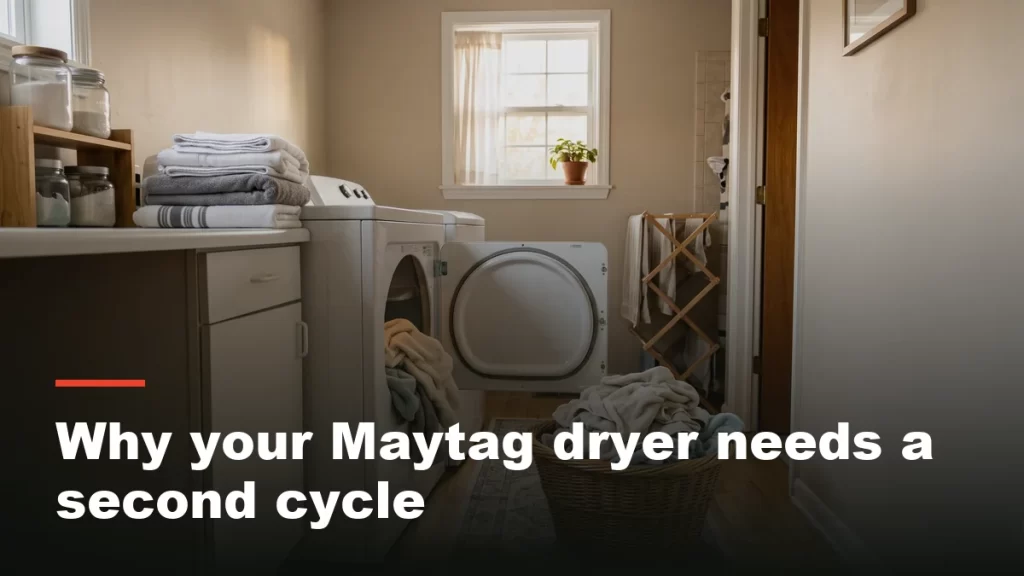
When a standard load of laundry requires running the dryer twice or three times to get fully dry, you are facing a classic airflow or heating issue. If your Maytag dryer takes too long to dry and runs a second cycle without throwing an error code, the machine is signaling a specific restriction in heat or ventilation. Our appliance service calls in Waterdown repeatedly point to a few common causes.
A dryer that requires a second cycle is rarely broken beyond repair. Understanding whether the root cause is airflow, load distribution, or a failing heating component—whether electric or gas—allows you to resolve the problem efficiently.
Why Your Maytag Dryer Takes Too Long to Dry
When an appliance experiences performance issues, manufacturer documentation emphasizes inspecting the exhaust system. Every dryer must push hot, moisture-laden air outside through an exhaust duct. When this line narrows, kinks, or becomes clogged with lint, exhaust capacity drops significantly. While the heat source and motor continue operating, trapped moisture forces the machine to demand a second cycle. Maytag’s official troubleshooting guide identifies restricted venting as the primary reason a Maytag dryer takes too long to dry.
Improper loading habits also contribute to extended cycle times. An overfilled drum limits air circulation across clothes. Mixing heavy items like towels with light garments causes uneven drying, where dense fabrics remain damp long after lighter pieces finish.
Pro Tip
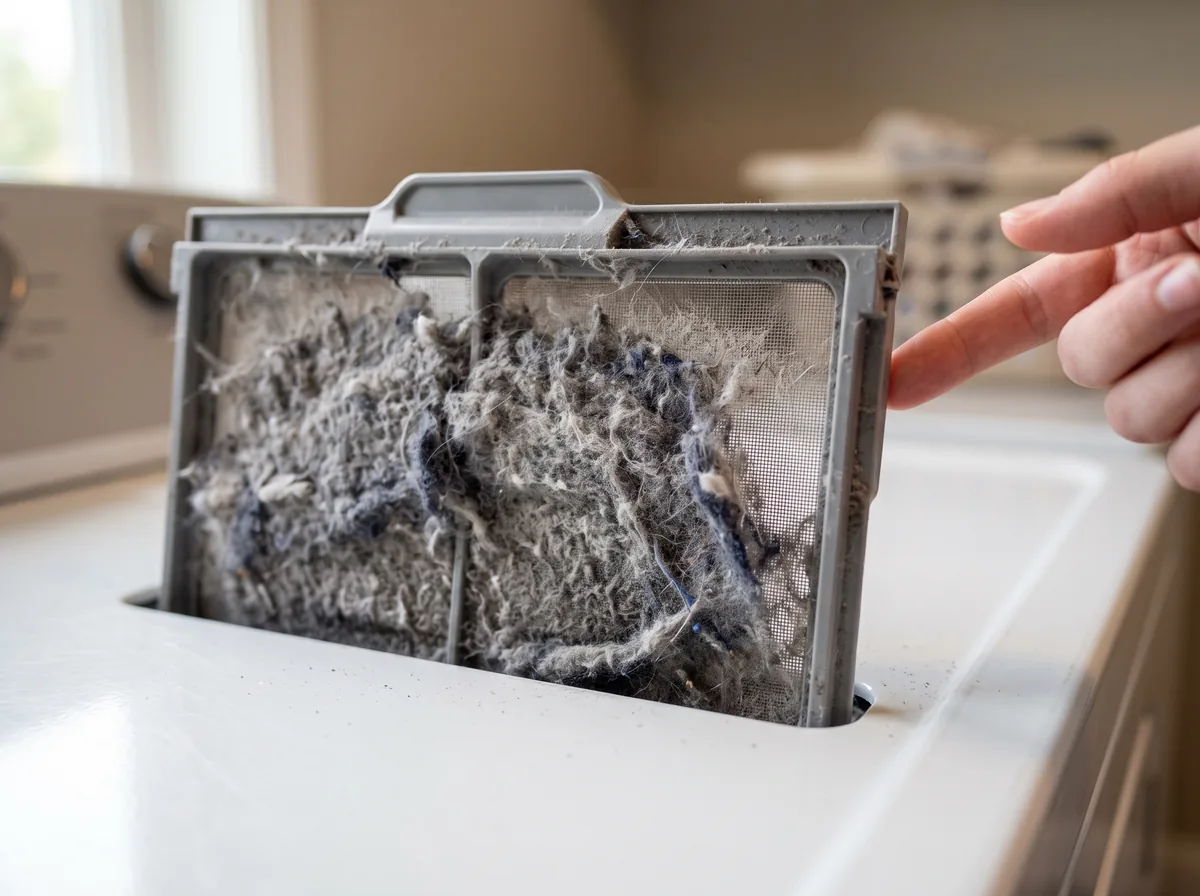
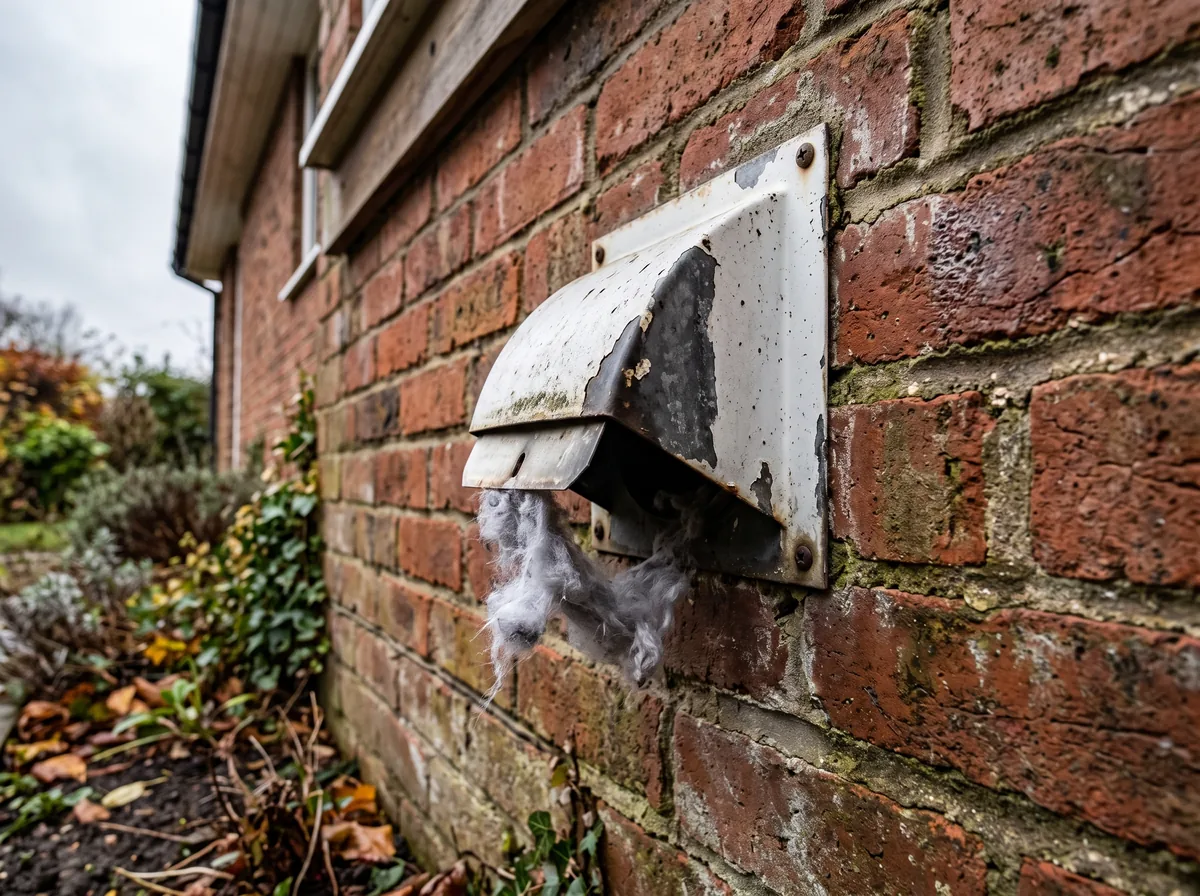
Check behind the dryer for a kinked or crushed transition hose. Next, inspect the exterior vent hood flap outside to confirm it opens freely while the appliance is running. Refer to Maytag’s guide on checking dryer venting for quick step-by-step instructions.
The Most Common Reasons a Dryer Needs a Second Cycle
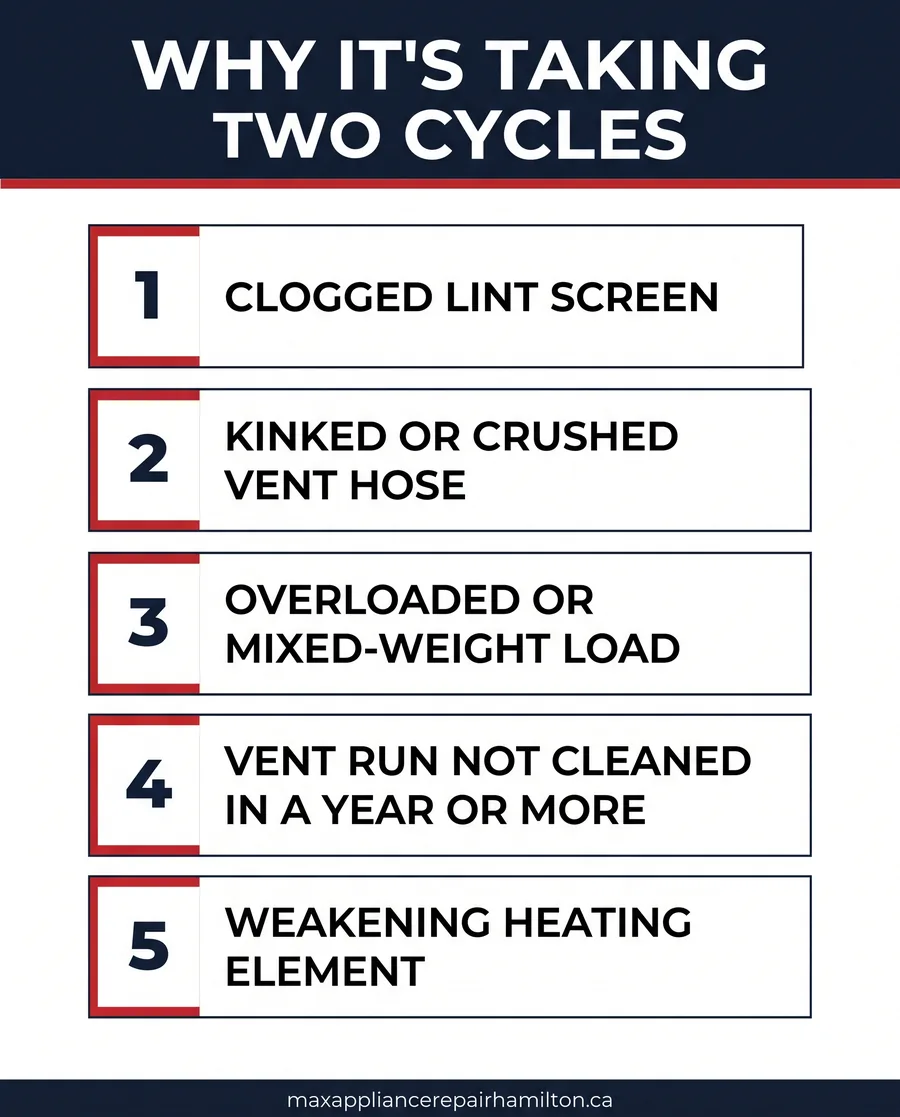
During field service visits, technicians regularly isolate the primary factors behind extended drying cycles:
- A lint screen clogged with fine debris or softener film
- A crushed, kinked, or excessively long vent hose behind the dryer
- An overloaded drum or mixed load weights
- A vent duct accumulation of lint over a year or more
- Electric Dryers: A burned-out or failing electric heating element wire
- Gas Dryers: A malfunctioning igniter, weak gas valve coils, or a clogged burner assembly
Because multiple issues—including venting restrictions, faulty thermostats, sensor glitches, and heating components—can cause incomplete drying, assessing air temperature by hand is unreliable. Confirming whether the issue stems from an electric heating element or a gas ignition system requires model-specific diagnostic testing.
When a Restricted Vent Becomes More Than a Dry-Time Problem
Extending operation time increases energy consumption and creates safety hazards. If a Maytag dryer takes too long to dry due to airflow blockage, trapped heat and accumulating lint raise fire risks. Promptly addressing drying delays maintains safety and appliance efficiency.
Red Flag
Sudden extensions in dry time are one of the primary indicators of a dangerous duct obstruction. Fire safety guidelines recommend cleaning your household ventilation system at least once a year to prevent lint buildup and mitigate heat risks.
What You Can Check Yourself and What Needs a Technician
Homeowners can easily clean the lint filter, check accessible exhaust hoses, and verify that the exterior vent flap operates properly. For complex duct runs—such as those found in older brick structures—or component testing, professional inspection is recommended. Read our article on dryer vent problems in Hamilton homes to learn how complex ductwork impacts performance.
When simple maintenance checks fail to resolve long dry times, internal components—such as heating elements on electric models or burner gas valves and igniters on gas models—require model-specific electrical and thermal diagnostic testing. Stopping manual troubleshooting at this stage prevents unnecessary wear or safety risks.
Good to know
This article offers general maintenance information for troubleshooting drying performance issues. Gas and electrical systems vary by home and model, and complex faults should be evaluated by a certified appliance service professional.
Download the Free Quick Guide
A printable troubleshooting checklist covering initial inspection steps and technician questions.
Frequently Asked Questions
Why does my Maytag dryer need two cycles to finish a normal load? ▼
When a Maytag dryer takes too long to dry and requires a second cycle, restricted airflow is the primary culprit. Clean the lint screen, check the transition hose for kinks, and ensure the exterior exhaust flap opens cleanly.
Could a heating component issue be causing long dry times instead of the vent? ▼
Yes. If the duct system is clear, component issues may be responsible. Electric dryers can suffer from a damaged heating element coil, while gas dryers may experience igniter or gas valve coil failures. Model-specific diagnostic testing is required to isolate these component faults.
Is it normal for a bulky load to require extra drying time? ▼
Dense items like comforters retaining high moisture content will naturally take longer. However, if light or standard medium loads continuously require extra cycles, a system airflow or heating restriction exists.
When does a slow-drying Maytag need professional service? ▼
If lint screens and accessible vent lines are clean but long dry times persist, book a service appointment. Immediate service is recommended if you notice burning odors, extreme cabinet heat, or zero heat output.
If your dryer is running double cycles, complete these basic checks:
- Clean the lint screen and inspect the rear transition hose.
- Run a test load containing similar-weight garments filled to half capacity.
- Ensure the exterior exhaust damper opens freely during operation.
- If long drying times persist, schedule a professional technician to evaluate the heating assembly (electric element or gas ignition/burner) and main duct line.
Max Appliance Repair Hamilton performs appliance repairs in Stoney Creek, Hamilton, and surrounding communities. Review our regional service coverage, or contact our team to book a service visit.
