

You can help maintain your kitchen appliances with about fifteen minutes of routine care a month with no special tools required. A fridge can last twelve to fifteen years, an oven fifteen to twenty, and a dishwasher ten or more, yet plenty of Waterford homeowners replace them early for one avoidable reason: dust, grease, and hard water quietly wear the parts out. Before you assume a tired appliance is done, or book fridge repair for your Waterford home, a little upkeep can help keep your units running smoothly.
Waterford sits on well and municipal water that runs hard in this part of Norfolk County, and hard water is rough on the appliances that use it. This guide walks through the fridge, oven, dishwasher, and the small habits that matter for maintaining kitchen appliances, so your kitchen keeps earning its keep through its expected service life.
In this article
- Why kitchen appliances fail early
- The fridge: coils, gaskets, and airflow
- The dishwasher and Waterford’s hard water
- The oven and stove: heat, seals, and grease
- Small habits for proper appliance care
- How long appliances last and what repairs cost
- When repair beats replacement
- Frequently asked questions
Why kitchen appliances fail early
Most kitchen appliances do not die of old age; they die of neglect. A refrigerator with coils buried under two years of dust runs its compressor twice as hard. A dishwasher fed hard water builds a chalky scale on its heater and spray arms until it can barely clean. An oven with a torn door seal bakes unevenly and burns out its heating element early. None of this damage is dramatic at first. It just adds up, quietly, until the appliance quits earlier than necessary.
The flip side is the good news. Because early failure is usually about buildup and wear, maintenance is straightforward. You do not need to be a professional technician to care for your kitchen appliances: you just need a vacuum, a soft brush, a manufacturer-approved cleaner, and a few minutes a month.
Did you know
Dirty condenser coils are a leading reason refrigerator compressors fail early. Dust insulates the coils so the compressor cannot shed heat, forcing it to run hotter and longer. A ten-minute vacuuming twice a year is one of the most effective maintenance tasks in the whole kitchen.
The fridge: coils, gaskets, and airflow
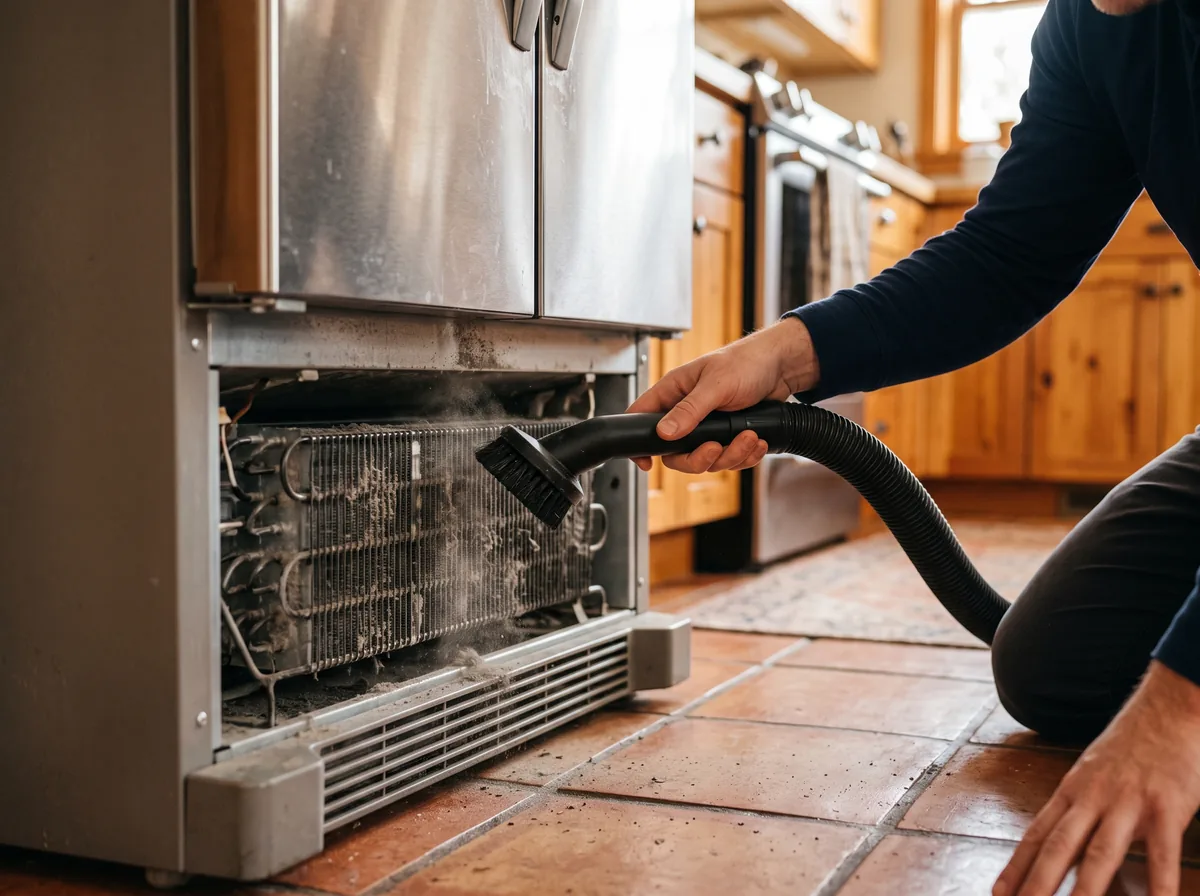
Your refrigerator runs around the clock, which makes it the appliance where routine maintenance pays off most. Start with the condenser coils, usually behind a kick panel at the bottom or on the back. Twice a year, unplug the fridge and vacuum the coils clean. If you have pets, make it three or four times. Keeping coils clean helps prevent unnecessary stress on the compressor.
Next, check the door gasket. Close the door on a slip of paper and pull; if it slides out easily, the seal is weak and warm air is leaking in, forcing the fridge to work overtime. Wipe the gasket clean, and replace it if it is cracked. Finally, give the fridge room to breathe. Pushing it tight against the wall traps heat around the coils. Leave a few centimetres of space so air can move.
Pro tip
Keep your fridge between 3 and 4 degrees Celsius and the freezer at minus 18. Set colder than that and the compressor runs longer for no benefit, increasing strain and raising your bill. A five-dollar fridge thermometer tells you the truth your dial often does not.
The dishwasher and Waterford’s hard water
Hard water is tough on dishwashers, and Waterford has plenty of it. The dissolved minerals leave scale on the heating element, spray arms, and inlet valve. Over time that scale insulates the heater, clogs the spray jets, and leaves your glasses cloudy no matter how much detergent you add. Left unchecked, it reduces cleaning performance and can trigger an expensive dishwasher repair that routine maintenance would have prevented.
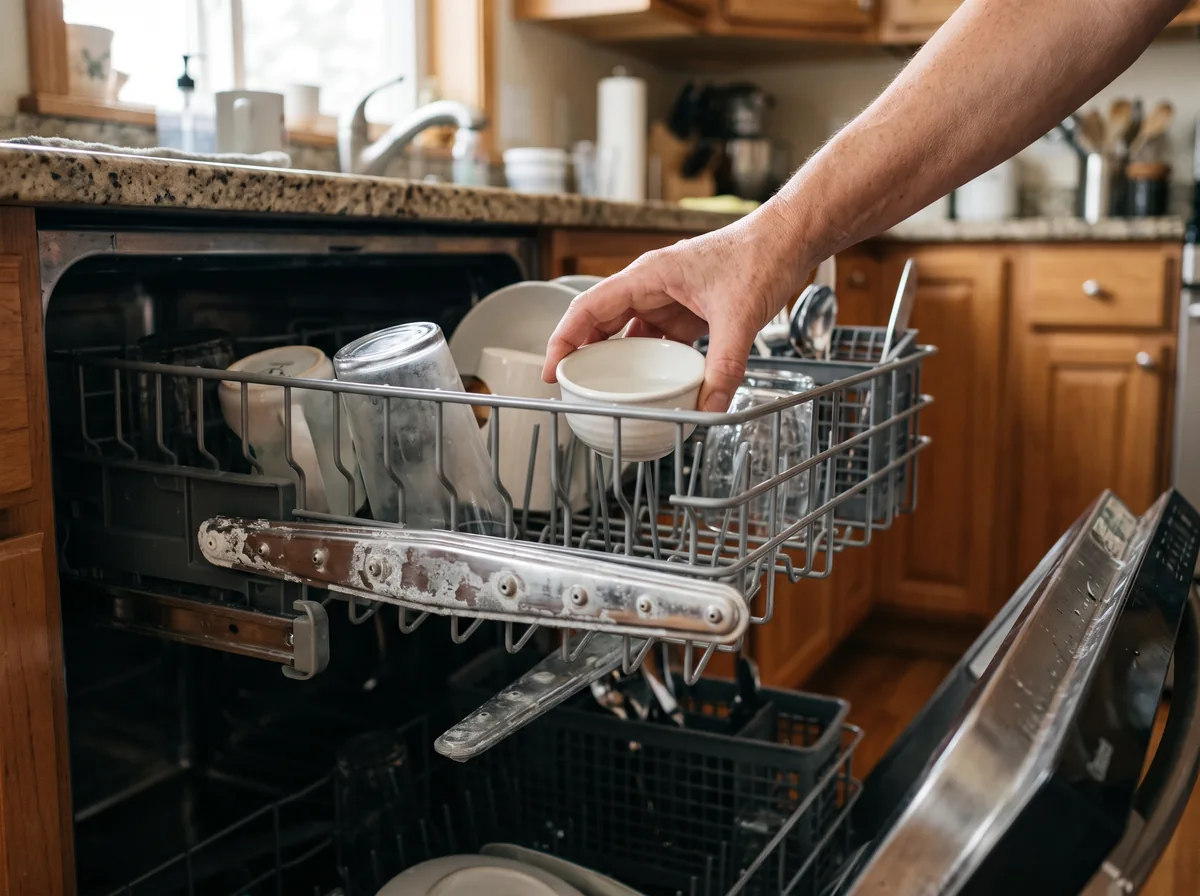
The solution is simple. Clean your dishwasher regularly using a manufacturer-approved cleaner and procedure according to your owner’s manual to dissolve scale safely without damaging internal seals or parts. Clean the filter at the bottom of the tub every few weeks, since trapped food is a leading cause of poor cleaning and odor. Use a rinse aid to fight spotting, and scrape plates rather than pre-rinsing them, which actually helps modern dishwashers work better. If your home has very hard water, a whole-house softener is a good long-term option to protect every water-using appliance at once.
People often ask: does hard water really ruin a dishwasher?
It does not ruin it overnight, but it steadily degrades performance. Mineral scale builds on the heating element and spray arms, making the machine work harder and clean worse. Running a manufacturer-approved cleaner following the owner’s manual and keeping the filter clean keeps scale at bay. In a hard-water area like Waterford, this routine helps protect your dishwasher so it reaches its full expected lifespan.
The oven and stove: heat, seals, and grease
Ovens are simple machines, so they perform well for years when treated properly. Two main things degrade an oven’s performance: a bad door seal and baked-on grease. A torn or flattened door gasket lets heat escape, forcing the element to cycle more often and wear out faster while your baking comes out uneven. Check the seal for gaps and replace it if it is damaged.
Prone to grease buildup? Spills that carbonize on the element or burner can cause hot spots and, on gas ranges, block the burner ports so they light unevenly. Wipe spills once they cool, clean the burner caps, and use the self-clean cycle sparingly, since its extreme heat is hard on seals and electronics. If a burner or element is already misbehaving, a targeted oven repair is usually cheaper than living with an oven that cannot hold temperature.
Small habits for proper appliance care
None of these habits take long, and practicing them is an effective way to keep your kitchen appliances operating efficiently.
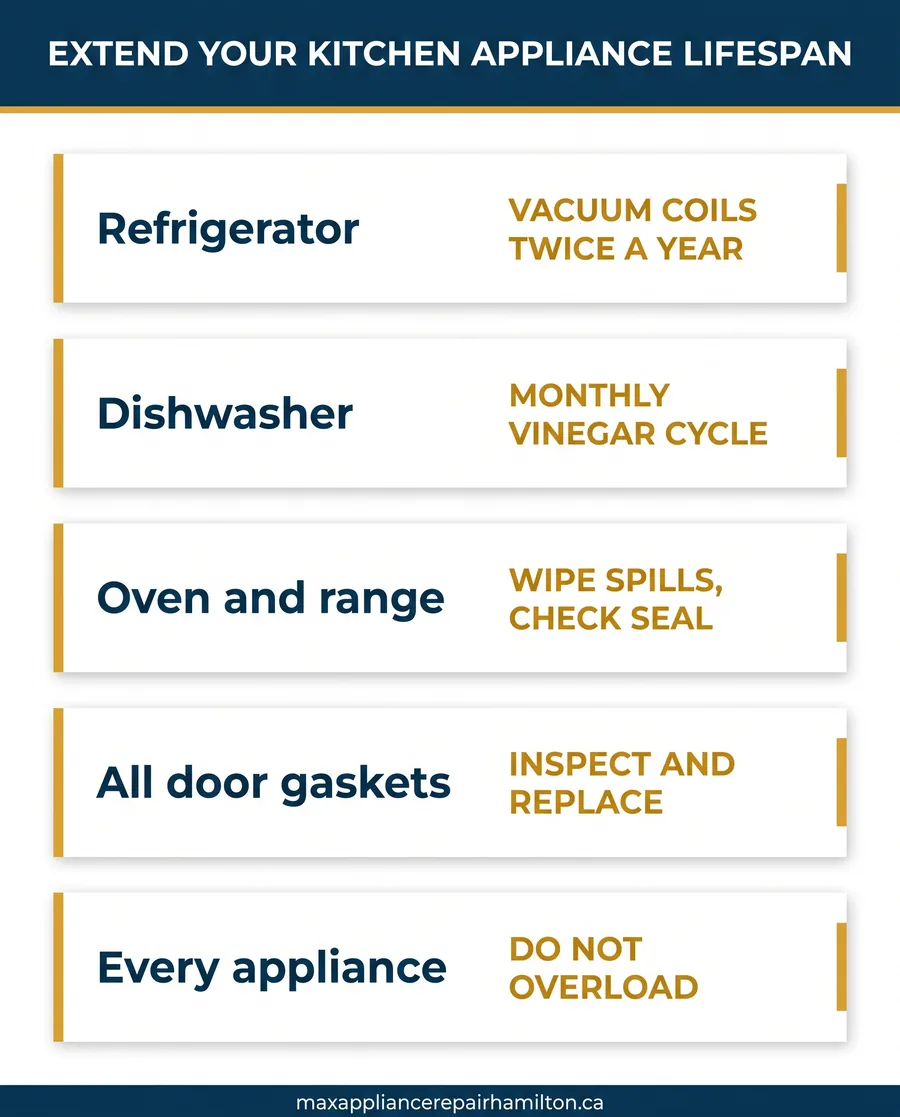
- Vacuum the fridge coils twice a year, more with pets, to keep the compressor cool.
- Use a manufacturer-approved descaling cleaner in your dishwasher according to manufacturer instructions, and clean its filter every few weeks.
- Wipe oven and stovetop spills once they cool so they never carbonize onto the element.
- Check door gaskets on the fridge, oven, and dishwasher, and replace any that are cracked or leaking.
- Do not overload the dishwasher or fridge; crammed appliances block airflow and water spray.
- Level every appliance. A tilted fridge or washer strains its motor and seals over time.
How long appliances last and what repairs cost
Knowing the typical lifespan of each appliance helps you decide whether to maintain, repair, or replace. Here is a rough guide for a well-kept kitchen, along with the kinds of repairs that come up along the way:
| Appliance | Typical lifespan (well maintained) | Common mid-life repair |
|---|---|---|
| Refrigerator | 12 to 15 years | Compressor start relay, door gasket, fan motor |
| Dishwasher | 10 to 12 years | Drain pump, heating element, inlet valve (scale) |
| Electric oven or range | 15 to 20 years | Bake or broil element, door gasket, thermostat |
| Gas range | 15 years or more | Igniter, burner valve, oven safety valve |
| Over-the-range microwave | 9 to 10 years | Magnetron, door switch, keypad |
When repair beats replacement
A good rule of thumb: if a repair costs less than half the price of a new appliance and the unit is within its expected lifespan, fix it. A five-year-old fridge with a failed relay is worth repairing. A fourteen-year-old one that needs a new compressor usually is not. When you are unsure, a proper diagnosis settles it. As one of Hamilton and Norfolk County’s most trusted and highest reviewed appliance repair teams, we tell Waterford homeowners honestly when a repair makes sense and when it is time to let an appliance go.
Download the free quick guide
A one-page monthly and seasonal checklist to keep your fridge, oven, and dishwasher running smoothly in a hard-water home.
Frequently Asked Questions
A little maintenance goes a long way, but when an appliance needs more than a cleaning, Max Appliance Repair Hamilton serves Waterford and the surrounding towns, including Simcoe, Port Dover, and the wider Norfolk County and Hamilton area. Book an appliance diagnosis and we will tell you honestly whether it is worth repairing or time to replace.
