
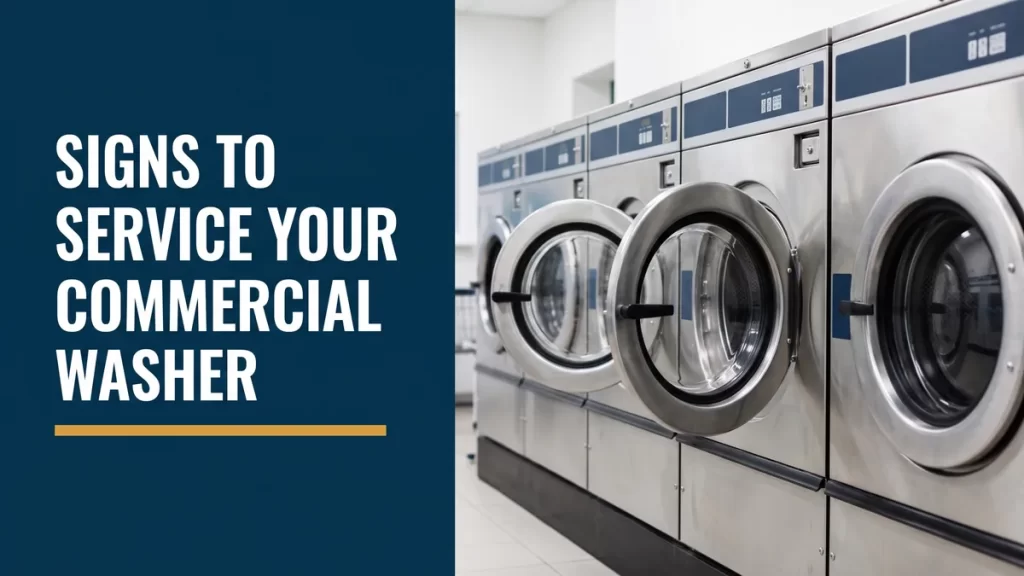
A commercial washing machine rarely dies without warning. Longer cycles, a faint burning smell, water on the floor, or a drum that thumps out of balance are the early signals that your commercial washer maintenance is overdue. Catch them and you book a planned service call. Ignore them and you face a dead machine, a line of waiting customers or tenants, and lost revenue every hour it sits idle. If a unit is already acting up, commercial washer repair in Hamilton is a phone call away.
This guide is for laundromat owners, property managers running multi-unit laundry rooms, and small businesses with a heavy-duty washer on site. Below are the warning signs worth acting on, why they happen, and how to decide between a quick service and a full repair before a small fault snowballs into downtime.
In this article
- Why commercial machines need more care
- Signs it is time to service your commercial washer
- Noise, vibration, and a walking machine
- Water, leaks, and drainage problems
- Cycle times, error codes, and a service schedule
- Service now or repair later: a quick comparison
- When to bring in a technician
- Frequently asked questions
Why commercial machines need more care
Set inspections according to manufacturer service intervals, cycle count, load volume and operating conditions. Remove the machine from service after breaker trips, burning smells or active leaks. Because commercial equipment operates under vastly different demands than residential units, maintenance routines must adapt to actual usage rather than rigid rules of thumb.
The main difference in a commercial setting is the cost of failure. When a home machine quits, one family reschedules laundry night. When coin-op or shared washers quit, you lose paying customers, refund quarters, and risk losing business to competitors. Preventive care is not an unnecessary expense—it is insurance on your revenue.
Quick take
Commercial washers operate under variable strains. Tailored servicing protects uptime and keeps equipment dependable. Recognizing early warning signs lets you resolve issues before they escalate into costly emergency repairs.
Signs it is time to service your commercial washer
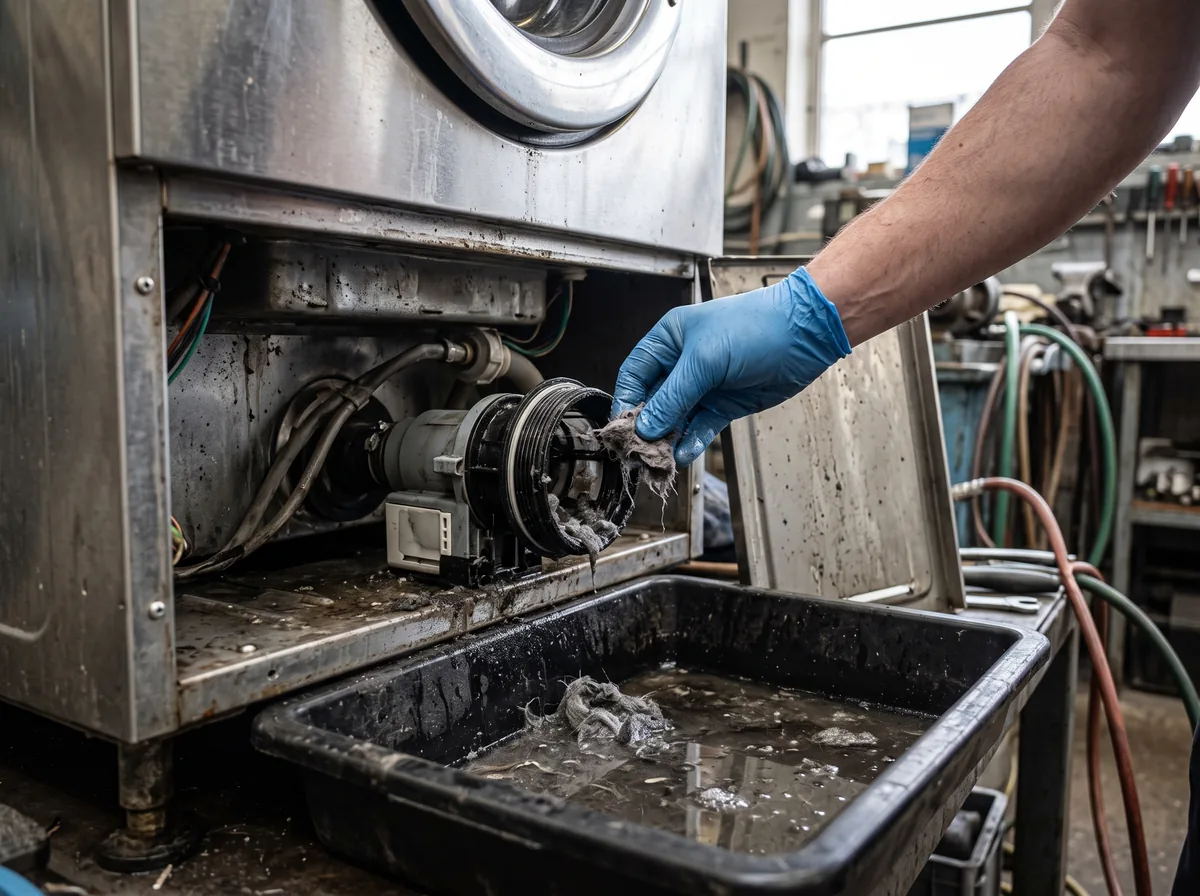
Most commercial washer maintenance steps trace back to a handful of symptoms that owners noticed and let slide. Here is what to watch for across the machines in your laundry room:
- Cycles that run longer than they used to, or clothes coming out wetter than normal after the spin.
- New noises: grinding, squealing, a low rumble, or a knock that lands on every rotation.
- The machine shifting or walking across the floor during spin, even with a balanced load.
- Water pooling under or behind the unit, or a slow drain that leaves the drum half full.
- A burning, musty, or electrical smell during or after a cycle.
- Error codes that clear on a restart but keep coming back within a day or two.
- Rising utility bills with no change in load volume, a sign a machine is working harder than it should.
Noise, vibration, and a walking machine
Vibration is the symptom owners tolerate longest, and the one that does the most hidden damage. A commercial washer that thumps or walks during spin is almost always telling you the drum bearings, the suspension springs, or the shock absorbers are worn. Left alone, a bad bearing chews through the drum shaft and the seal behind it, which turns a routine part swap into a major teardown.
Grinding or squealing usually points to the drive belt or the motor bearings. A rhythmic knock on every rotation often means something is loose or an object is trapped in the outer tub. None of these fix themselves. A technician can pin down the source in one visit, and catching a bearing early is far cheaper than a washer repair after the shaft has scored.
Pro tip
Run a quick spin test on an empty machine regularly. A healthy commercial washer spins up smoothly and stays put. If it rocks, hums louder than the others, or you can feel the vibration through the floor, flag that unit for service before the next busy period.
Water, leaks, and drainage problems
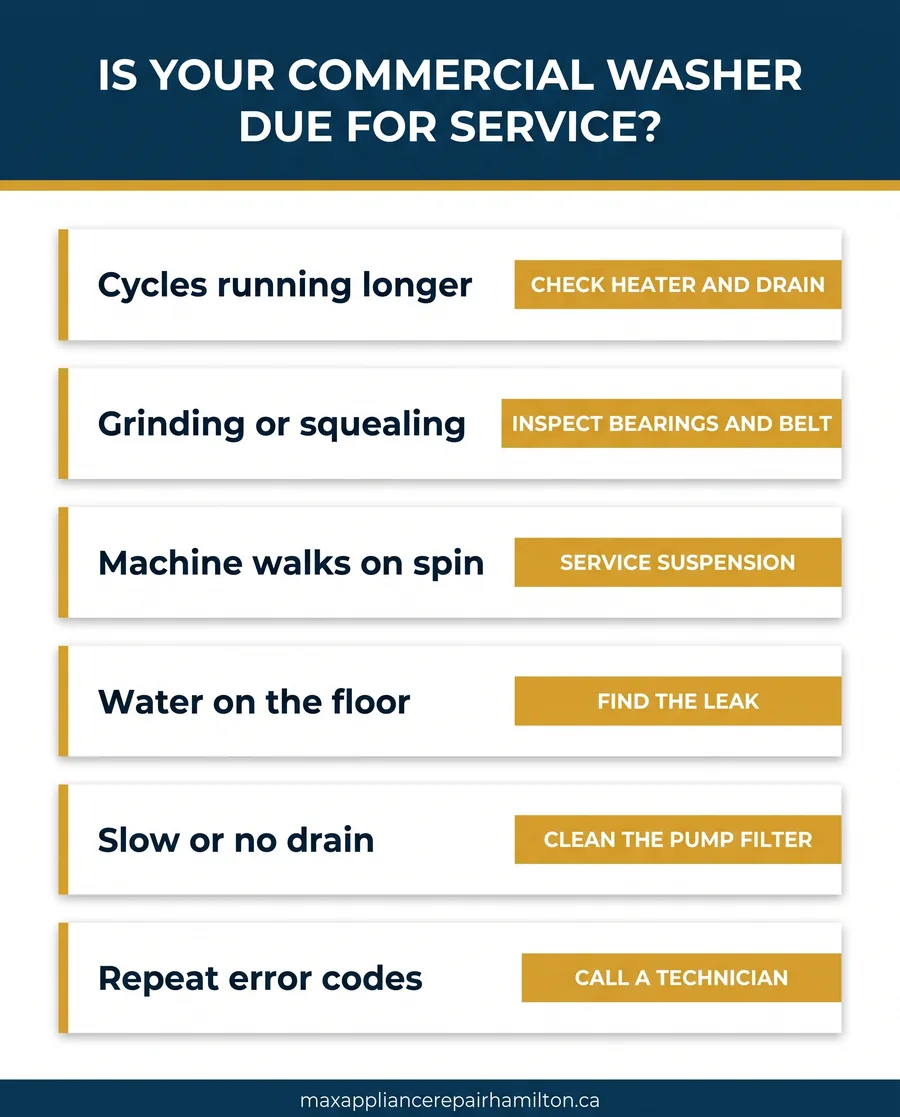
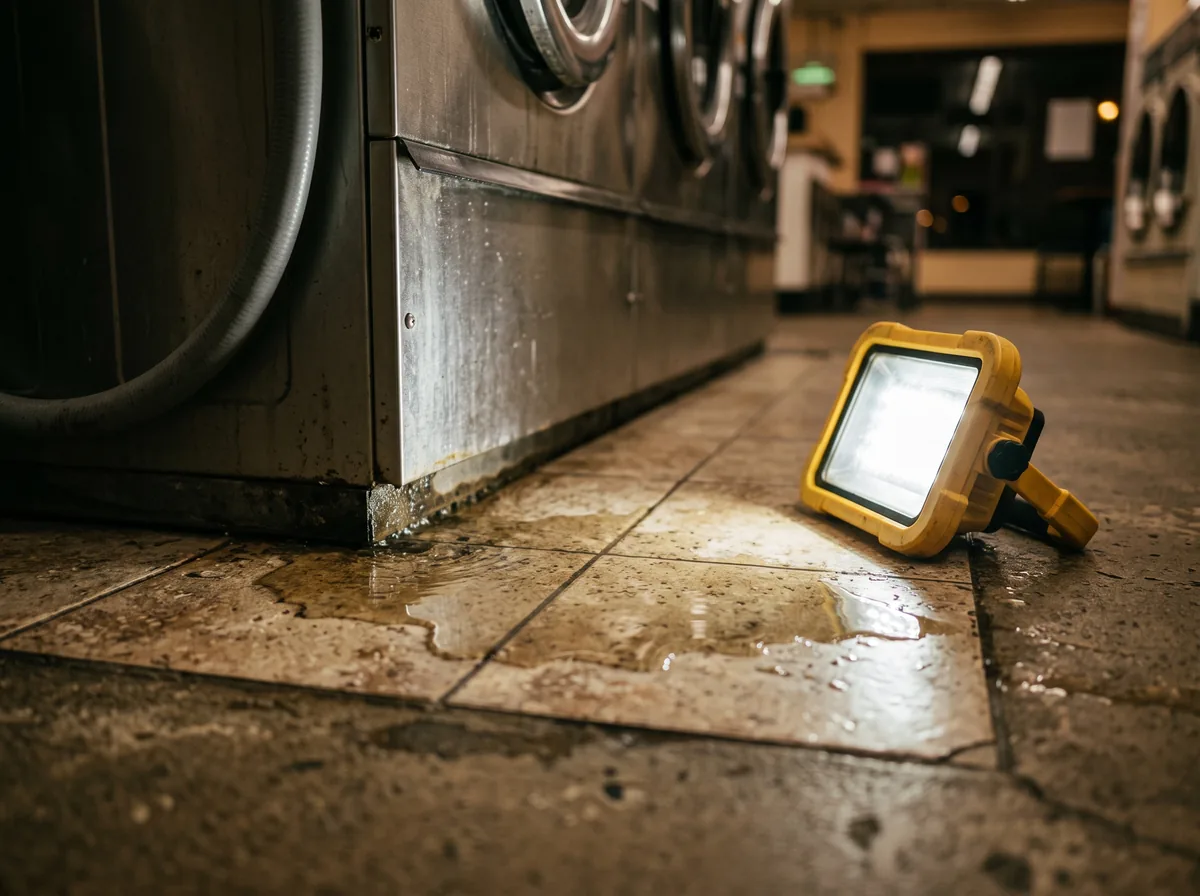
Water on the floor is never cosmetic in a commercial setting. It is a slip hazard, a mold risk, and often the first sign of a failing part. A leak at the door means a worn boot gasket. A leak underneath usually points to the drain pump, a split hose, or a tired tub seal. A machine that will not drain fully is often a clogged pump filter or a blocked drain line, both common where lint and coins collect over heavy use.
Drainage faults also strain the motor. When a pump struggles, the control board keeps calling for another drain and spin, which runs the machine hot and long. If you manage a shared laundry room, the same principles apply to your other equipment, so it is worth keeping a commercial dryer repair contact on hand for the same reasons.
People often ask: is a small commercial washer leak worth servicing?
Yes. A slow drip from a door gasket or drain hose rarely stays small. Water works its way into bearings, wiring, and the floor, turning a simple fix into a costly repair. Remember to remove the machine from service after breaker trips, burning smells or active leaks.
Cycle times, error codes, and a service schedule
Track how long your machines actually run. A cycle that has crept ten or fifteen minutes longer than it used to signals a heater, valve, or drain problem the machine is compensating for. Error codes that keep returning are the control board flagging a fault it cannot clear on its own. Write them down before resetting the unit, because the pattern provides valuable diagnostic information to your technician.
Rather than using rigid calendar timelines for every facility, set inspections according to manufacturer service intervals, cycle count, load volume and operating conditions. Remove the machine from service after breaker trips, burning smells or active leaks. Below is a practical guidelines table to structure your facility’s maintenance program:
| Task | Scheduling Basis | Why it matters |
|---|---|---|
| Clean the pump filter and drain trap | Cycle count / Load volume | Prevents slow drains and pump strain from lint and coins. |
| Inspect hoses, gaskets, and the door boot | Operating conditions / Routine checks | Catches leaks and cracks before water reaches electrical parts or bearings. |
| Check belt tension and drum bearing play | Manufacturer service intervals | Stops a worn bearing from scoring the drive shaft. |
| Run a hot maintenance wash with cleaner | Based on usage volume | Controls odor, detergent residue, and biofilm buildup. |
| Full technician service inspection | Manufacturer service intervals / Cycle count | Verifies motor health, control board operation, and calibration under load. |
Service now or repair later: a quick comparison
When a symptom shows up, you have two options: schedule preventive service now, or wait and pay for a repair when the part fails. Here is how those choices usually compare on commercial equipment:
- Planned commercial washer maintenance means you pick the timing, keep the machine earning, and swap worn components before major failure.
- Reactive repair means unplanned downtime, customer complaints or refunds, and often larger repairs when one broken component damages surrounding parts.
- A worn bearing serviced early is a standard repair. An ignored bearing can ruin the shaft, seals, and drum.
- A leaking gasket caught early is an easy swap. Ignored, water can reach the wiring harness and control electronics.
When to bring in a technician
Set inspections according to manufacturer service intervals, cycle count, load volume and operating conditions. Remove the machine from service after breaker trips, burning smells or active leaks. Call for professional service if a unit walks during spin, drains slowly, or displays recurring error codes. As one of Hamilton’s most trusted and highest reviewed appliance repair teams, we service commercial washers across laundromats, apartment buildings, and small businesses, replacing only the parts that truly require attention.
Download the free quick guide
A one-page schedule and warning-sign checklist to keep laundromat and multi-unit washers running with less downtime.
Frequently Asked Questions
Running commercial laundry in Hamilton, Stoney Creek, Grimsby, or Ancaster? Max Appliance Repair Hamilton keeps laundromat and multi-unit washers running with scheduled service and fast repairs across the wider Hamilton region. Book a commercial washer maintenance visit and we will find the fault, fix the right part, and get your machines earning again.
