
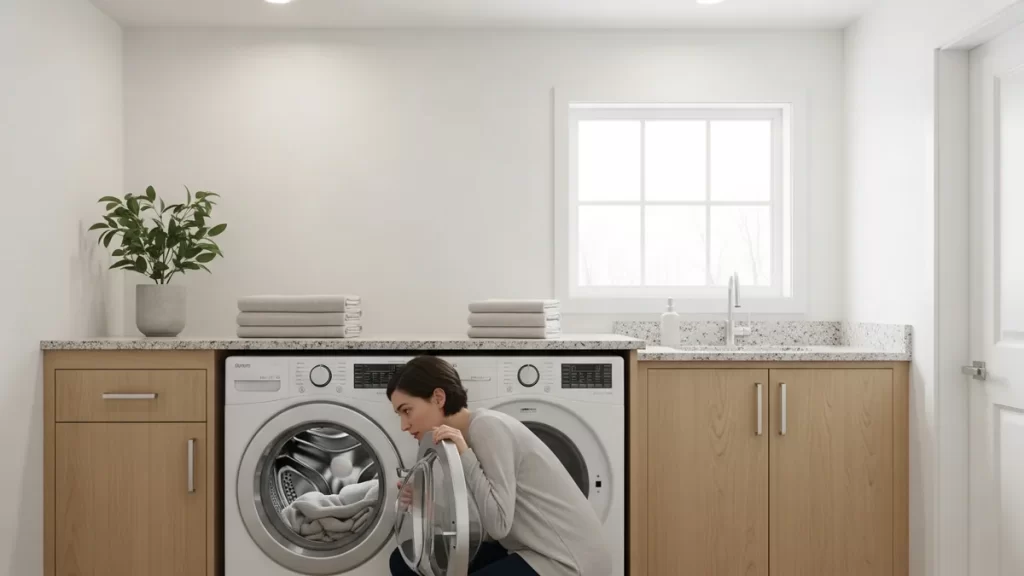
You pull a load of laundry out of the washer and the clothes smell worse than when they went in. Or you open the machine door and get hit with a musty, sour odor that has nothing to do with what you washed. This is one of the most common washing machine complaints in Hamilton, and it’s almost always fixable without a service call. The tricky part is figuring out which of the five causes you’re dealing with. Need washer repair in Hamilton if the steps below don’t resolve it? We cover that at the end.
Why washing machines develop odors
The short answer: washing machines are warm, wet, and dark. That’s the perfect environment for mold, mildew, and bacteria to grow. Every wash cycle leaves behind a small amount of detergent residue, lint, skin cells, and moisture. Over time, that buildup becomes a biofilm coating the drum, hoses, and internal components. Biofilm smells. And it doesn’t go away on its own.
Hard water in the Hamilton area makes this worse. The minerals in Hamilton’s water combine with soap residue to form a sticky scum that biofilm clings to. If your machine has been developing odors faster than expected, hard water is probably part of the equation.
Front-load vs top-load: which smells more
Front-load washers smell more. Not because they’re worse machines, but because of the rubber door gasket. That folded rubber seal traps moisture and detergent residue in its creases and almost never fully dries between cycles. If you have a front-loader and it smells like mildew, start with the gasket.
Top-load agitator machines vent better and dry faster between uses. They still develop odors, mainly from the drum and drain, but not as quickly. High-efficiency top-loaders (the ones without agitators) sit somewhere in the middle: better than front-loaders, but they have their own residue buildup issues because they use less water per cycle.
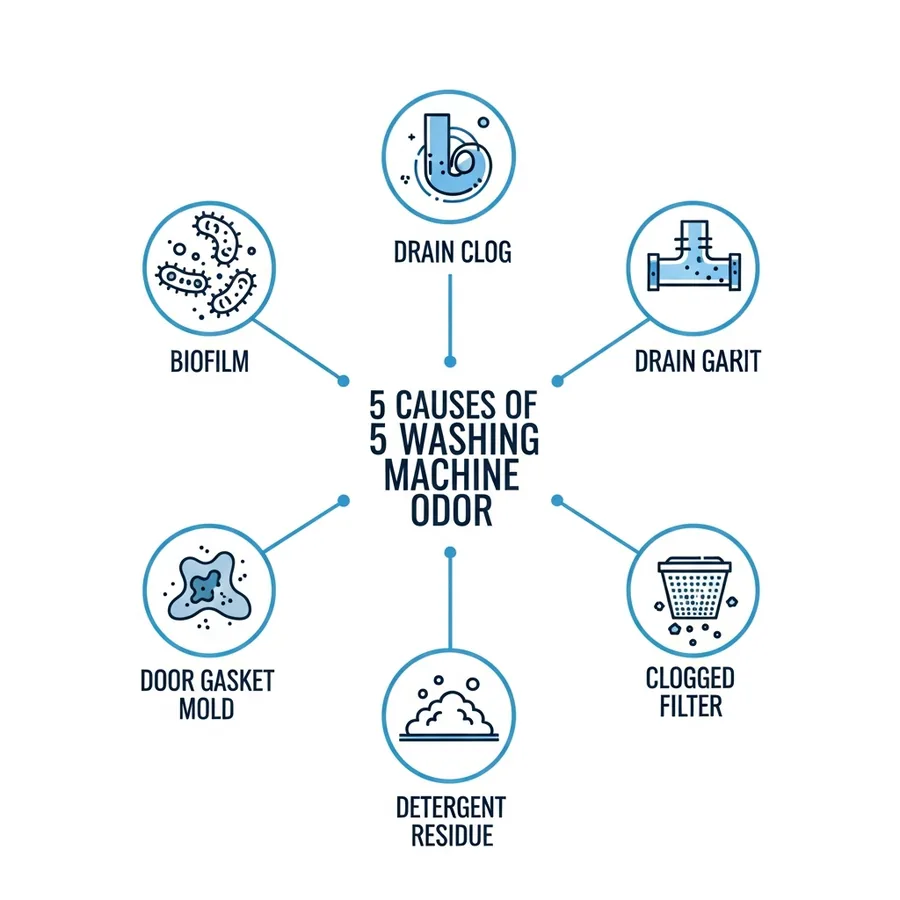
The five most common causes
1. Biofilm in the drum
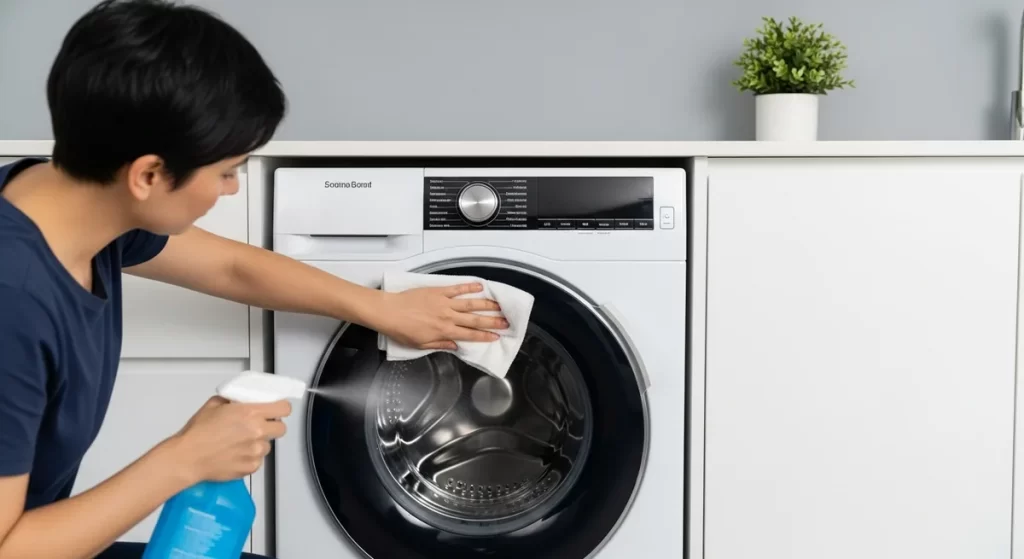
Smells like: musty, sour, damp. This is the most common cause. The drum looks clean but is coated in an invisible layer of bacteria and soap residue. Fix: run a drum clean cycle on the hottest setting with no laundry and no detergent. Repeat monthly.
2. Door gasket mold (front-loaders)
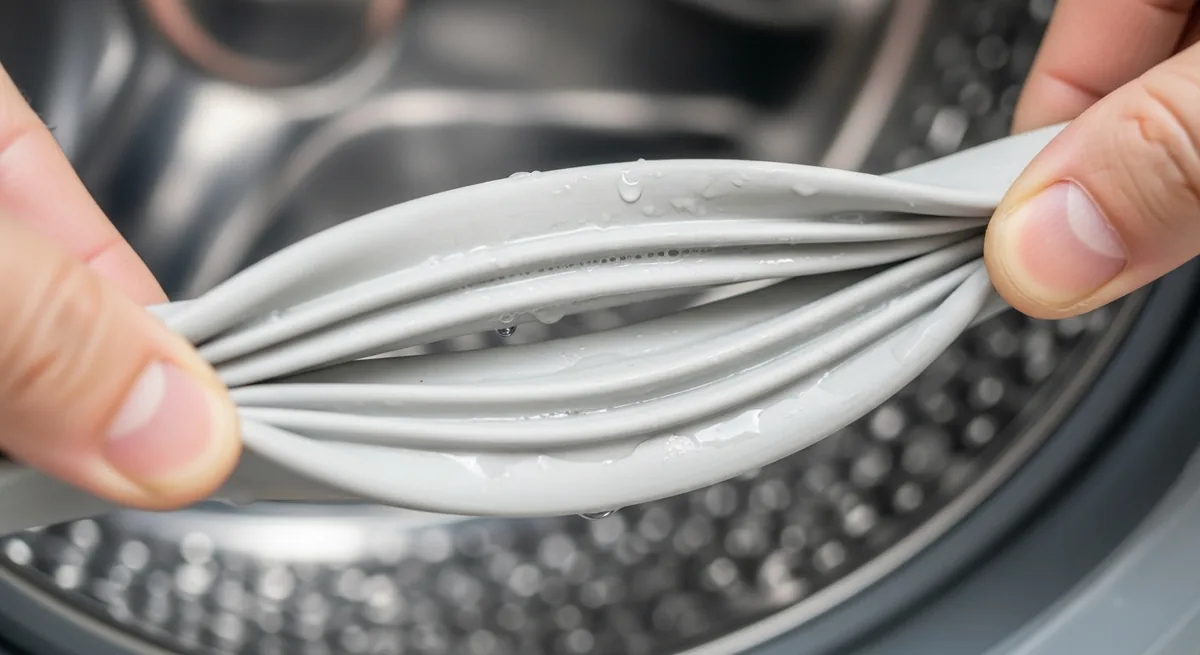
Smells like: mildew, that classic “wet dog” odor. Open the door, peel back the rubber gasket folds, and check for black or grey mold spots. Fix: scrub with a 1:1 mix of white vinegar and water, then wipe dry. Leave the door open after every wash so the gasket can dry.
3. Too much detergent or wrong detergent type
Smells like: soapy or slightly sour. Using regular detergent in an HE machine, or using too much of any detergent, leaves residue that never fully rinses. That residue feeds mold. Fix: switch to HE detergent and use about half the amount you think you need. Run an extra rinse cycle for a few weeks to clear the buildup.
4. Clogged drain pump filter
Smells like: sewage or something rotten. This one catches people off guard. Most front-load washers have a filter at the base of the machine that catches lint, coins, and debris. If it hasn’t been cleaned in months or years, the trapped material decomposes. Fix: locate the filter access panel at the bottom front of the machine, place a towel down, unscrew the cap slowly, drain the water, and clean the filter. Do this every two to three months.
5. Stagnant water in the drain hose
Smells like: rotten egg or sewer gas. If the drain hose siphons back, water sits in the hose and goes stagnant. This is a plumbing issue as much as an appliance issue. Fix: ensure the drain hose is properly looped up (the standpipe or utility sink should be at least 30 to 36 inches high) and that there’s an air gap. If this doesn’t resolve it, the hose itself may need cleaning or replacing.
How to fix a smelly washer step by step
Run through these steps in order. Most odors are resolved by step 3.
- Clean the gasket with white vinegar solution and a cloth. Get into the folds. Dry it completely.
- Clean the drain pump filter (bottom front of machine, behind the small access panel).
- Run a drum clean cycle on the hottest setting, empty, no detergent.
- Pull out the detergent drawer and rinse it under hot water. Check for mold in the back of the compartment.
- Check the drain hose routing and clean it if accessible.
- Leave the door ajar for 24 hours after completing all steps.
If the smell persists after completing all six steps, you likely have a pump seal issue or a deeper drain problem. At that point, it’s worth getting a tech to look at it. Our appliance repair service covers Stoney Creek and all Hamilton neighbourhoods same-day.
Preventing the smell from coming back
Once the machine is clean, maintenance is what keeps it that way. Three habits handle 90% of washer odor prevention:
- Leave the door ajar after every wash. This is the single highest-impact change you can make.
- Run a drum clean cycle monthly, or after any particularly heavily soiled loads.
- Wipe the gasket after each wash if you have a front-loader. Takes 20 seconds.
For Hamilton homeowners dealing with hard water, adding a monthly descaling routine helps further. A cup of white vinegar in an empty hot cycle once a month addresses both biofilm and mineral buildup at the same time.
When to call a tech
Call a tech when the smell persists after two full cleaning cycles, you can smell sewer gas coming from the machine (points to a drain or pump issue), the gasket has visible mold that cleaning doesn’t remove (the gasket may need replacing), or the machine isn’t draining fully after each cycle.
A failed pump seal is one of the more common causes of persistent washer odor that doesn’t respond to cleaning. The seal allows water to stay inside the pump housing and go stagnant. Replacing it is a straightforward repair. For appliance repair in Dundas and Hamilton, our techs carry most common washer pump seals and gaskets on the truck.
Download the free guide
Washing machine smell causes, fixes, and maintenance schedule in a printable guide
Download PDF GuideFrequently asked questions
Why does my washing machine smell even after cleaning it?
If one cleaning cycle didn’t fix it, the source is likely deeper: the drain filter, the drain hose, or a pump seal. Run through all five causes above and address each one before calling it unfixable.
Is it safe to use a smelly washing machine?
The clothes may pick up the odor, and if the smell is from mold, repeated exposure to moldy laundry isn’t great. It’s not immediately dangerous, but clean the machine as soon as possible.
How often should I clean my washing machine?
Run a drum clean cycle monthly. Clean the filter every two to three months. Wipe the gasket after every wash on front-loaders.
Does vinegar damage washing machines?
White vinegar used in a cleaning cycle is fine. Don’t pour it directly on rubber seals repeatedly over many months, as it can degrade rubber over time. For regular monthly cleaning, a cup in the drum during a hot cycle is safe.
Why does my front-load washer smell worse than my old top-loader?
The door gasket holds moisture. Top-loaders vent through the top and dry faster. Leave the door ajar on your front-loader after every use and the problem largely resolves itself.
Need appliance repair in Hamilton?
Same-day service across Hamilton, Stoney Creek, Ancaster, Dundas and surrounding areas.
Book a Service Call
