
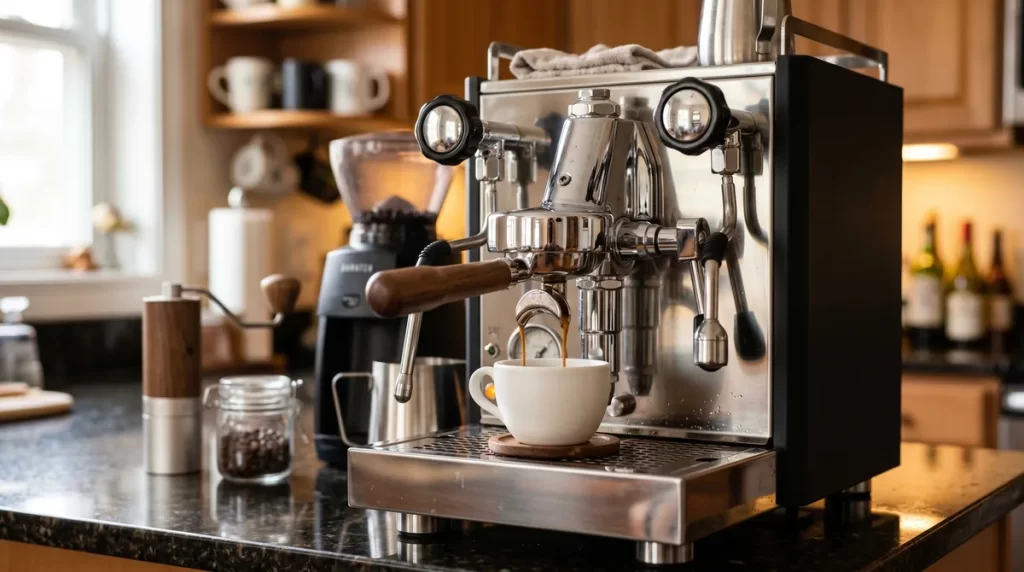
Espresso machines sit at the intersection of high heat, high pressure, and daily use — conditions that inevitably produce problems over time. Most common espresso machine problems fall into a short list of well-understood causes, and a surprising number can be resolved with basic maintenance. This guide covers the 5 problems Hamilton espresso machine owners report most often, with clear steps to diagnose and fix each one.
1. Machine leaking water from the group head or portafilter
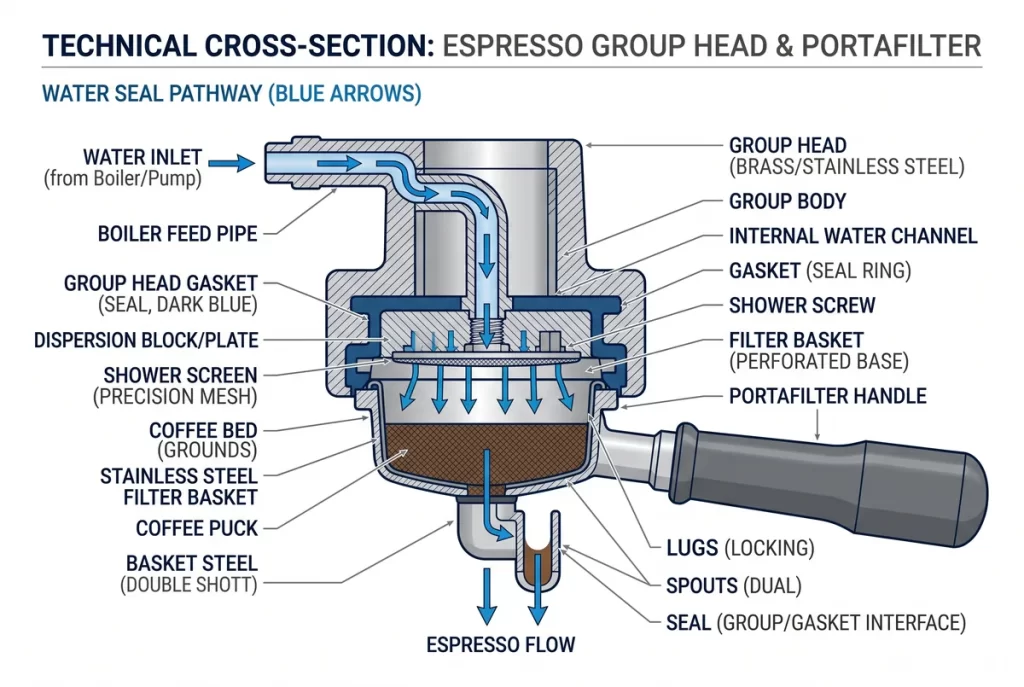
Leaking is the most common complaint, and the location of the leak matters enormously for diagnosis. Leaks from the portafilter connection — water dripping around the sides of the handle during extraction — almost always indicate a worn or hardened group head gasket.
The group head gasket is a rubber ring that seals the connection between the portafilter and the machine body. With daily use and the thermal cycling of heating and cooling, the gasket hardens and loses its sealing ability, typically after 12 to 18 months of regular use. Coffee grounds and scale accelerate the wear.
Fix: Replacing the group head gasket is one of the most common espresso machine DIY repairs. The gasket itself costs $3 to $12 depending on the model. The process involves removing the shower screen, prying out the old gasket, and pressing in the new one — typically a 15 to 30 minute job with basic tools. Use the correct gasket thickness for your machine (usually 8mm or 8.5mm).
Leaks from elsewhere: Leaking from the bottom of the machine, from the drip tray in unusual volumes, or from the steam wand area all indicate different problems. Bottom leaks often come from cracked boiler fittings or failed boiler seals and require professional repair.
2. Espresso pulling too slowly or with no pressure
If espresso is dripping out instead of extracting as a steady stream, or the machine feels like it has lost pressure, the issue is usually one of three things: a blocked shower screen, a clogged solenoid valve, or a failing pump.
Blocked shower screen: The shower screen distributes water evenly across the coffee puck. Scale and fine coffee grounds build up on both sides over time. Remove the screen (usually held by a single screw) and soak it in a descaling solution or warm water with a cleaning tablet. This is a basic monthly maintenance step that prevents pressure issues.
Clogged solenoid valve: Most modern espresso machines include a three-way solenoid valve that releases pressure from the portafilter after extraction. This valve can clog with scale and coffee residue. Symptoms include poor pressure during extraction and a wet puck after pulling a shot. Cleaning the solenoid valve involves disassembly and soaking in descaler — a moderate-difficulty repair but well within reach for a mechanically capable owner.
Pump wear: Vibration pumps (used in most consumer and prosumer espresso machines) have a typical service life of 3 to 7 years under regular use. A failing pump loses pressure gradually. Pump replacements run $30 to $80 for the part depending on the machine, and replacement is a standard repair for most mid-range machines.
3. Heavy scale buildup reducing performance
Hamilton, like most of Southern Ontario, has moderately hard water with elevated calcium and magnesium content. Every cup of water that passes through an espresso machine deposits a small amount of mineral scale inside the boiler, heating block, and flow paths. Over months and years, this scale insulates heating elements, restricts water flow, and forces the pump to work harder against partially blocked passages.
According to Natural Resources Canada, water heaters with significant scale buildup can use 10 to 20 percent more energy to reach target temperature — the same principle applies to the heating elements inside espresso machines.
Prevention: Use a water filter in the machine’s reservoir if your model supports one, and run a full descaling cycle every 2 to 3 months in Hamilton’s water conditions. Most machines have a descale indicator. Do not ignore it — a single missed descale cycle is harmless, but consistently skipping descaling for a year leads to scale-induced heating failures that shorten the machine’s life.
4. Steam wand not producing steam or producing weak steam
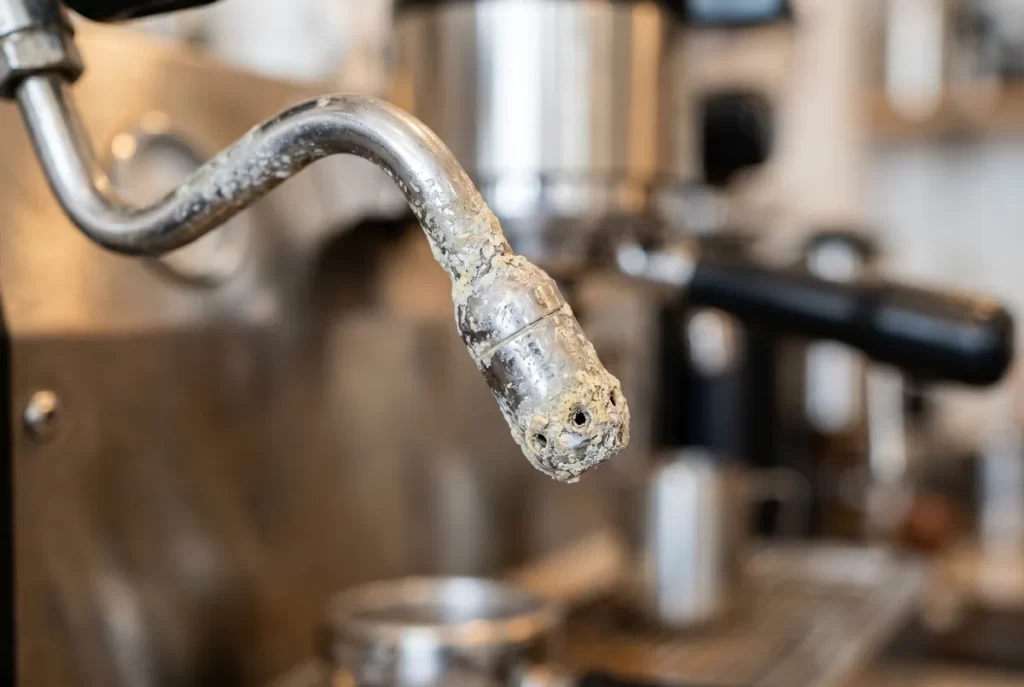
A steam wand that produces no steam, very weak steam, or steam that sputters with water is usually caused by scale blockage in the steam valve or wand tip, or a failed steam valve.
Blocked wand tip: The most common and simplest cause. Milk residue dries and blocks the tiny steam holes in the tip. Clean the tip immediately after every use with a damp cloth. For existing blockage, remove the tip (usually it unscrews or pulls off), soak in warm water or milk frother cleaner for 20 minutes, and clear each hole with a pin.
Scale in steam valve: If cleaning the tip does not restore steam, scale buildup inside the steam valve body is likely. A thorough descaling cycle often resolves this. If the machine has not been descaled in over a year, run two descaling cycles back-to-back before pursuing a part replacement.
Failed steam valve: Steam valves develop worn seals that allow steam to leak past even when closed, or seize up when buildup fuses moving parts. Valve replacement is a job for a qualified technician in most machines, as it involves accessing the boiler system.
5. Machine not turning on or losing power mid-use
An espresso machine that will not power on, or that shuts off mid-use, typically has one of three causes: a tripped thermal fuse, a failed control board, or an electrical fault in the power cord or switch.
Thermal fuse: Like household appliances, espresso machines include a one-use thermal fuse that trips if the machine overheats. A blown thermal fuse prevents the machine from powering on at all. This is a common failure on machines that ran dry (no water in the boiler) or that have significant scale buildup causing the heating element to overheat. Thermal fuses for most espresso machines cost $5 to $15 and are straightforward to replace once the machine is disassembled.
Control board: On machines with electronic controls, a failed control board can cause complete power loss or intermittent shutoffs. Board repairs or replacements on higher-end machines are worth pursuing — on machines under $300, the board cost may approach replacement value.
Repair decision point: For espresso machines under $200, a board failure or major internal fault typically makes replacement the better choice. For machines in the $400 to $1,500 range (mid-range prosumer territory), repair almost always makes financial sense.
Important note
Disclaimer: This article is for general guidance only. Costs, products, regulations, and best practices change. Max Appliance Repair Hamilton is not liable for outcomes from actions taken based on this content. Always confirm with a licensed appliance technician for your specific situation. Never attempt boiler or electrical repairs without fully unplugging and depressurizing the machine.
Frequently asked questions
Espresso machine repair in Hamilton
If your espresso machine needs more than a gasket swap or a descale, Max Appliance Repair provides espresso machine repair in Hamilton with same-day and next-day appointments available. We service most major brands and carry common repair parts on every truck.
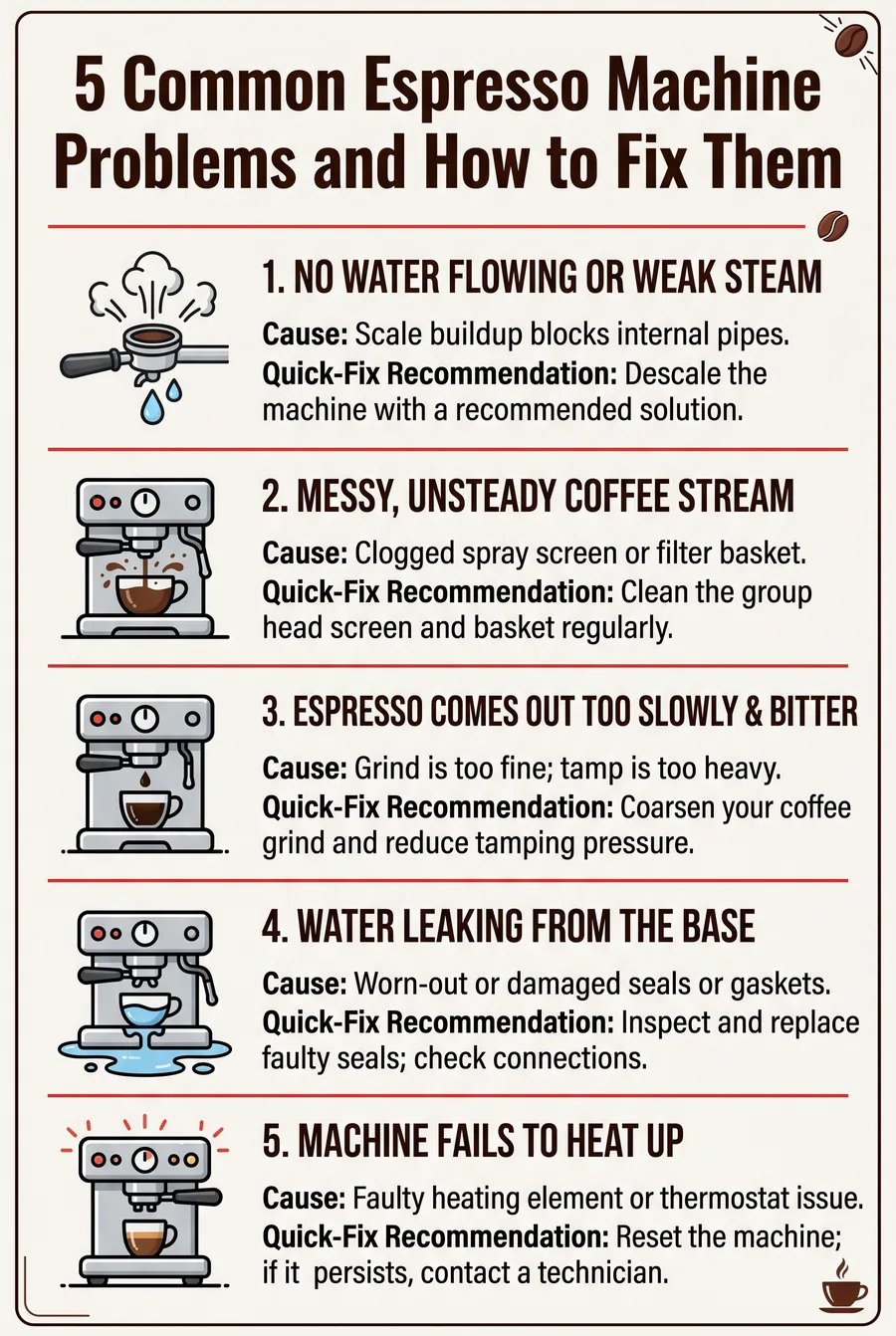
Download: Espresso Machine Troubleshooting Quick Reference (PDF)
All 5 common problems with causes and step-by-step fixes on one printable page.
