
What are the signs of a bad oven element? In plain terms: food that comes out raw on top or soggy underneath, an element that no longer glows an even bright orange, longer-than-usual preheat times, or visible damage like blistering and a burnt-through spot on the metal coil. If you have noticed any of those in your Hamilton kitchen, the heating element is the most likely suspect, and it is one of the more common repairs we handle on oven repair calls across Hamilton.
The good news is that a failed element is usually a clean, contained repair rather than a sign the whole oven is done. This guide walks through how to spot the warning signs, how to tell an element problem from a sensor or control problem, and where the line sits between a safe check and a job for a technician.
In this article
- What the heating element actually does
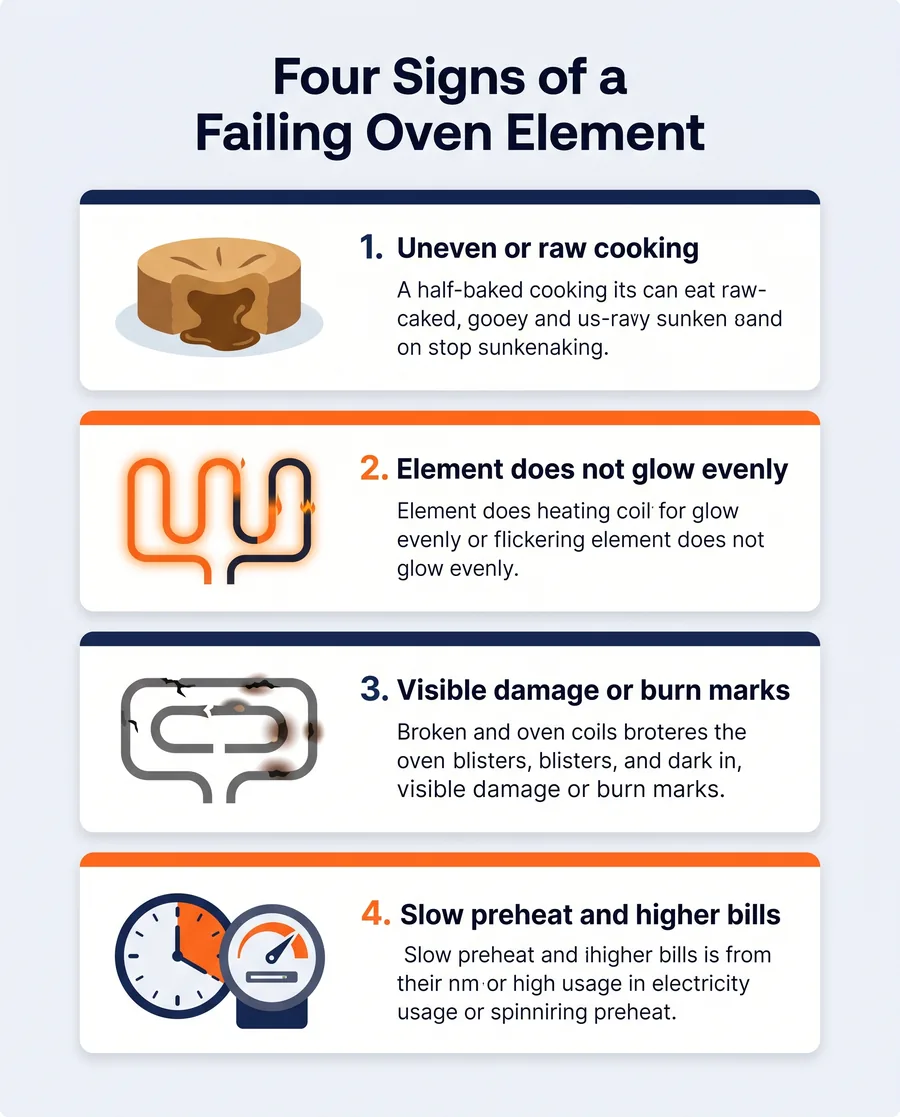
- Sign 1: food cooks unevenly or stays raw
- Sign 2: the element does not glow evenly
- Sign 3: visible damage or burn marks
- Sign 4: slow preheat and higher energy bills
- When it is not the element
- What an oven element repair costs in Hamilton
- Frequently asked questions
What the heating element actually does
Most electric ovens have two heating elements: a bake element along the bottom and a broil element across the top. They are metal coils that glow red-hot when current passes through them, turning electricity into the heat that cooks your food. Over years of expanding and contracting through thousands of heat cycles, the metal eventually fatigues, develops a weak spot, and breaks the circuit. That is the moment your oven stops heating the way it should.
Here is the part that matters before you touch anything: those elements run on a 240-volt circuit, not the 120-volt outlets you plug a lamp into. That is enough to cause a serious or fatal shock. So while spotting the signs of a failing element is something anyone can do, the actual replacement means cutting the power at the breaker first, every single time.
Safety first: The tips here are for general guidance only. Max Appliance Repair Hamilton is not responsible for damage, injury, or cost from action taken based on this content. Before you touch any part inside an appliance, unplug it or switch off its breaker. Electric ovens and ranges run on 240 volts and can deliver a serious or fatal shock even when the unit looks off, so confirm the power is dead before reaching inside. Anything involving gas, internal wiring, or sealed refrigerant must be left to a TSSA-licensed or fully trained technician. If a step is beyond your comfort, stop and call a professional.
Sign 1: food cooks unevenly or stays raw
This is usually the first thing people notice. A cake rises on one side and stays flat on the other. A roast browns up top but is cold in the middle. Cookies on the bottom rack burn while the top rack barely colours. When part of an element has failed, the oven cannot put out steady, even heat, so your food tells the story before any warning light does.
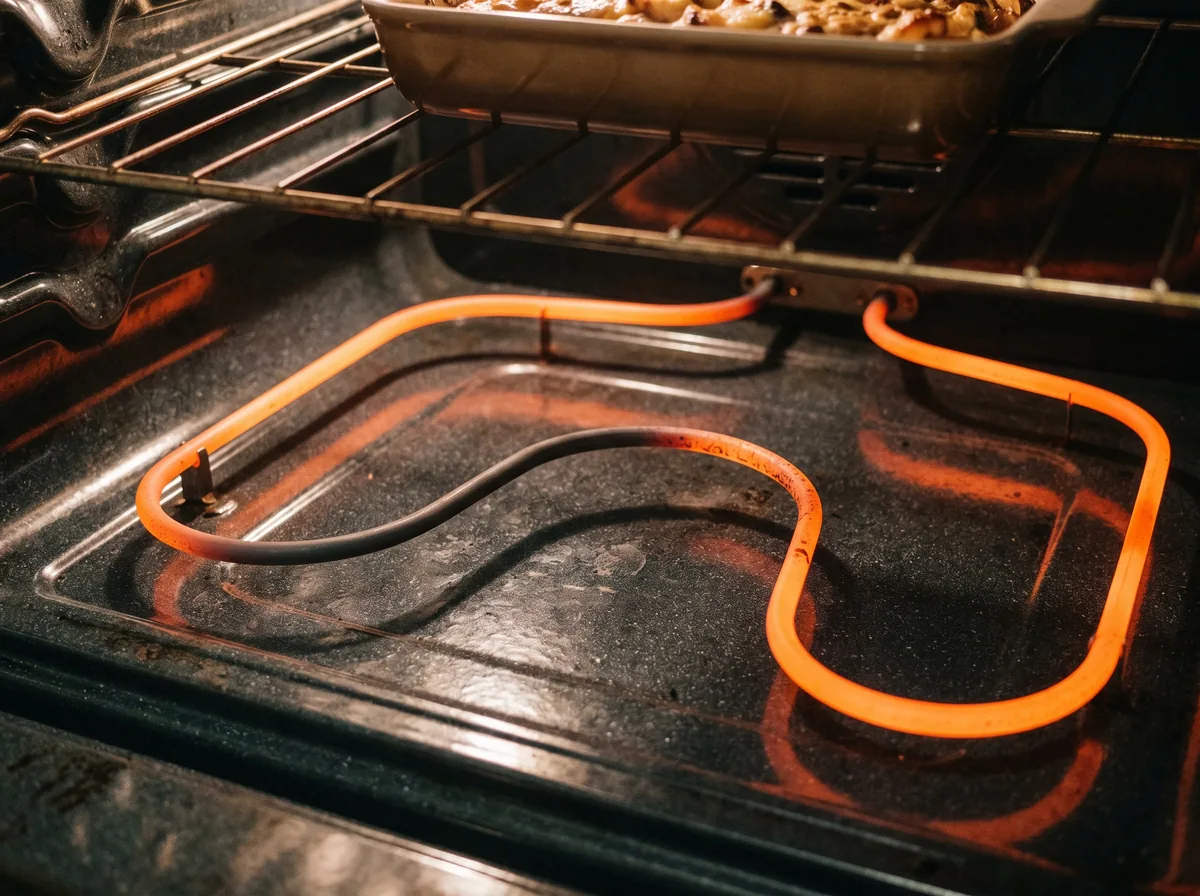
If only the broiling fails, suspect the top element. If baking is the problem, look at the bottom one. A handy test: set the oven to broil and watch the top element through the door, then set it to bake and watch the bottom one. The faulty element is the one that does not glow evenly all the way across.
Save a service call: rule out the rack and the recipe first
Before you blame the oven, make sure the rack is centred and you are giving the oven a full preheat. A lot of “uneven cooking” turns out to be a crowded oven, a dark pan that over-browns, or a door opened too often. Run one clean test bake with a single centred tray. If that still cooks unevenly, the element is back on the suspect list and you have saved yourself a wasted call.
Sign 2: the element does not glow evenly
A working element glows a steady, bright orange across its entire length within a few minutes of switching the oven on. When you see only part of it glowing, a section staying dark, or no glow at all, the element is failing or has already failed. This is the single most reliable visual sign, because it shows you the fault directly rather than through the food.
Open the door and look, but do not touch. The element reaches several hundred degrees and stays dangerously hot long after the oven is off. If the element is completely dark while the oven claims to be heating, the circuit is broken somewhere along the coil and the part needs replacing.
People often ask: should the oven element turn off and on while cooking?
Yes, and this is normal. Once the oven reaches the set temperature, the element cycles off, then back on as the heat drops, to hold the temperature steady. So an element that glows, goes dark, then glows again is working exactly as designed. What is not normal is an element that never glows at all, or one that only glows along part of its length. That is the difference between healthy cycling and a genuine fault.
Sign 3: visible damage or burn marks
Sometimes the element shows you it is done. Look for a spot where the metal has blistered, bubbled, separated, or burnt clean through. You might also see a bright spark or a small flash from one point on the coil right before it dies, which is the element arcing as it fails. Any visible break in the coil means the element cannot carry current along its full length.
Red flag: sparks, a tripped breaker, or a burning smell
If your oven sparks, trips the breaker, or gives off a persistent burning or electrical smell, stop using it and switch off the breaker. A failed element can short to the oven body, which is both a shock and a fire risk. Do not keep running the oven to “see if it sorts itself out.” This is the point to bring in a qualified technician rather than open the back panel yourself.
Sign 4: slow preheat and higher energy bills
A subtler sign shows up before an element fails completely. As the metal degrades, it heats less efficiently, so the oven takes longer to reach temperature and the element stays on longer to hold it. That extra run time quietly nudges up your electricity bill. If preheating used to take ten minutes and now takes twenty, and you have not changed anything else, a tired element is a fair suspect.
This overlaps with another common complaint: an oven that runs hot or cold compared to the dial. That can be the element, but it can also be the temperature sensor. We cover that crossover in our guide to why your oven temperature is wrong and how to fix it.
When it is not the element
Not every “oven not heating” problem is the element. A few other parts produce similar symptoms, which is why a proper diagnosis matters before you buy a part. Common look-alikes:
- Temperature sensor. A failed sensor feeds the control board the wrong reading, so the oven over- or under-heats even with a perfect element.
- Control board or thermostat. If the board is not sending power to the element, the element is innocent. It simply never gets the signal to heat.
- Igniter (gas ovens). Gas ovens have no electric bake element. A weak igniter that does not open the gas valve is the usual no-heat cause, and gas work is strictly for a licensed technician.
- Wiring or a burnt connector. The element can be fine while a scorched wire at its terminal breaks the circuit.
What an oven element repair costs in Hamilton
Pricing note: The figures on this page reflect typical market rates in Hamilton and the surrounding area as of 2026. What you actually pay depends on the make and age of the appliance, the parts involved, and how easy the unit is to access. Always ask for a written quote before approving a repair.
A bake or broil element is one of the more affordable oven repairs, which is part of why a failed element rarely justifies replacing the whole oven. The ranges below are typical Hamilton starting points for 2026. For more on how appliance repairs are priced locally, see our Hamilton appliance repair cost guide.
| Repair | Typical Hamilton range (2026) | Notes |
|---|---|---|
| Bake element replacement | $160 to $300 | Common, accessible part |
| Broil element replacement | $170 to $310 | Similar to bake element |
| Temperature sensor | $150 to $270 | Often confused with element failure |
| Control board or thermostat | $300 to $550 | Higher end; affects repair-or-replace |
| Gas oven igniter | $220 to $400 | Licensed gas technician only |
Because the element itself is inexpensive, a single failed element on a sound oven is almost always worth fixing. Replacement only enters the conversation when the control board fails on an older range, or when several parts are going at once.
Sources and further reading
- Today’s Homeowner, “Signs your oven’s heating element is broken” (consumer guidance).
- Max Appliance Repair Hamilton, in-house service data and 2026 Hamilton-area pricing observations.
- RepairClinic.com, “Oven will not heat: how to test the bake and broil element” (video, embedded above).
Frequently asked questions
How do I know if my oven element is bad or if it is the sensor?
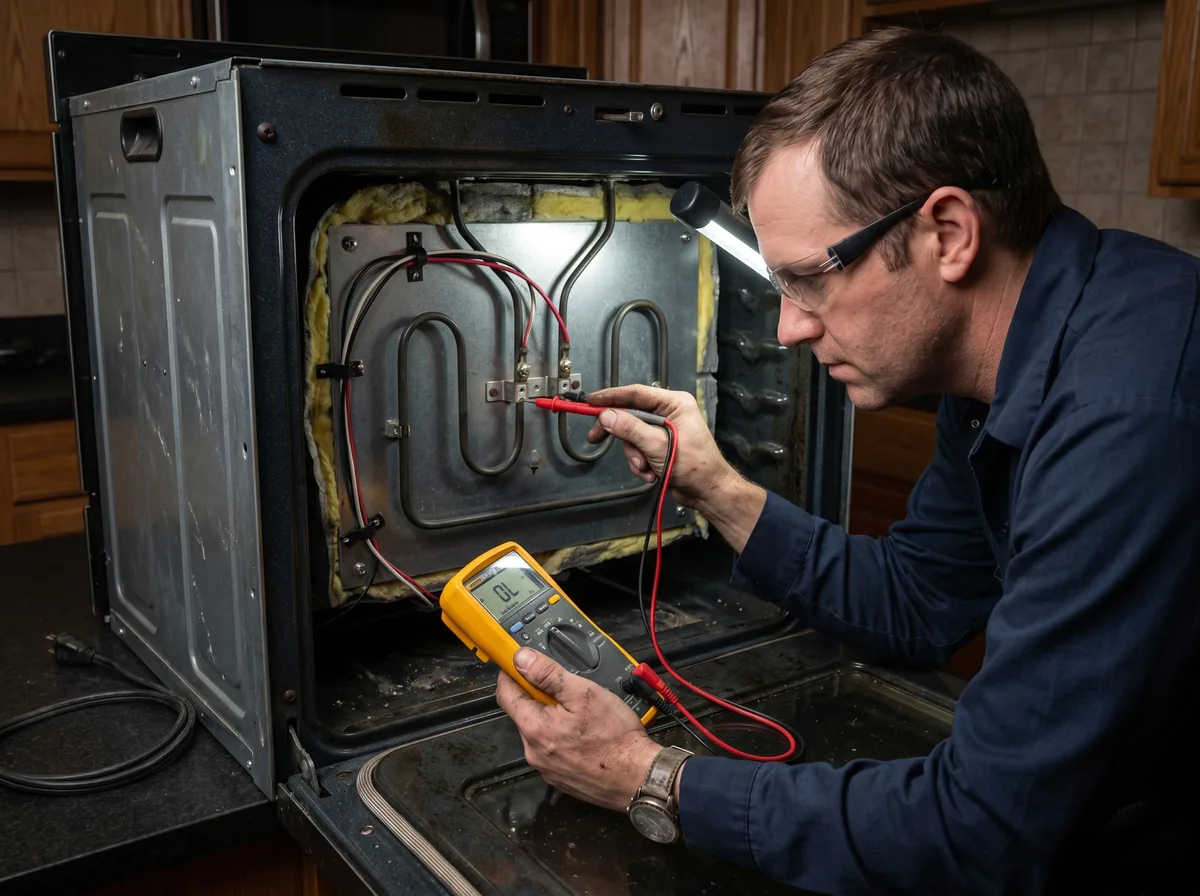
Watch the element. A bad bake or broil element will not glow evenly across its full length, or will not glow at all, and you may see a burnt or blistered spot on the coil. A bad temperature sensor, by contrast, usually leaves the element glowing normally but causes the oven to run hot or cold compared to the dial, because the board is getting the wrong reading. If the element looks and glows fine but temperatures are off, suspect the sensor. If the element is dark or visibly damaged, it is the element. A technician confirms either with a quick continuity test.
Is it safe to replace an oven heating element myself?
A visible bake or broil element is one of the more DIY-friendly oven parts, but only if you respect the electricity. Electric ovens run on a 240-volt circuit that can cause a serious or fatal shock, so you must switch off the breaker before touching anything, not just turn the oven off. If the element is the simple plug-in or two-screw type at the back of the cavity and you are comfortable confirming the power is dead, it is doable. If it requires removing the back panel, working with hard-wired connections, or if your oven is gas, leave it to a qualified technician.
Can a bad oven element be dangerous?
It can. A failing element can short against the oven body, which trips the breaker and creates both a shock and a fire risk. Warning signs are sparks or a bright flash from the coil, a burning or electrical smell, or a breaker that trips when the oven heats. If you see any of those, stop using the oven and switch off its breaker right away. Do not keep running it. At that point it is a job for a technician, who can confirm whether it is the element, the wiring, or a connector, and replace the part safely.
How long do oven heating elements last?
There is no fixed lifespan, since it depends on how often you use the oven and how hot you run it. Many elements last well over a decade in a typical household, while a heavily used oven may see one fail sooner. They wear out from repeated heating and cooling, which slowly fatigues the metal until a weak point breaks. The encouraging part is that a single failed element is rarely a reason to replace the oven. The part is affordable and the repair is contained, so a good oven usually has plenty of life left after a new element goes in.
What to do next
If your oven is cooking unevenly, leaving food raw, or the element will not glow the way it used to, you have almost certainly found your culprit. The smart move is to confirm it before you spend on parts, and to never open the oven up without cutting the power first.
- Watch the element under bake, then broil, and note which one fails to glow evenly.
- Rule out the simple stuff: rack position, a full preheat, the right pan.
- If you see sparks, smell burning, or trip the breaker, switch off the breaker and call a pro.
Download the free quick guide
Keep our printable checklist on the fridge so you can spot a failing element early and know when it is safe to look closer.
Oven not heating right in Hamilton?
A failing element is one of the quickest oven repairs we do, and we keep common bake and broil elements on the van. Book oven repair in Hamilton, get help with your range or stove, or contact our team to schedule a visit. We diagnose the real cause first, so you are not paying for a part your oven did not need.
