
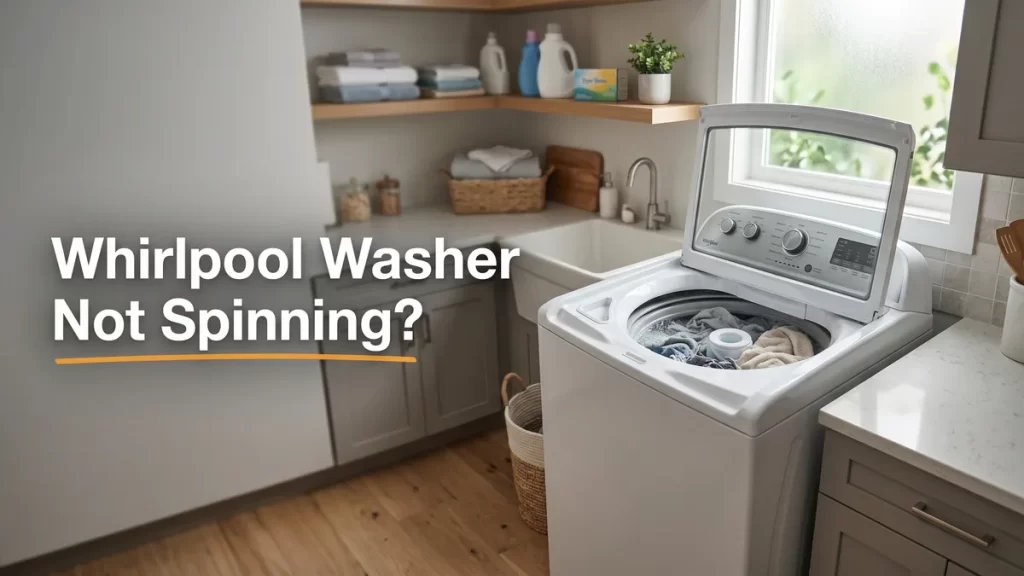
Picture this: the cycle ends, you open the lid, and your laundry is sitting in a pool of water, soaked and heavy. The machine ran, it drained or maybe it did not, but the drum never built up speed. A Whirlpool washer not spinning is one of the most common calls we get in Hamilton, and the good news is that a fair number of these turn out to be small things you can sort out yourself in a few minutes. The rest are real mechanical faults that are worth handing to a technician. If you would rather skip straight to a fix, our team handles washing machine repair across Hamilton with same-day visits in most cases.
This guide walks through the problem the way a repair tech does: start with the simple, free checks, then work down to the parts that actually wear out. Run them in order and you will either fix it or know exactly what to tell the person who comes to fix it.
In this article
What ‘not spinning’ actually means
It helps to be precise, because “not spinning” covers a few different faults. Sometimes the drum does not move at all. Sometimes it turns slowly but never reaches the fast final spin, so clothes come out dripping. And sometimes it spins fine but the washer will not drain first, so water sloshes around and the machine refuses to ramp up. Each of those points to a different cause, so the first thing to do is watch a cycle and note which one you have.
On a Whirlpool top loader, the spin is driven by a motor, a transmission, and a coupling between them. On a front loader, a belt and motor do the work. When any link in that chain slips or fails, the drum cannot reach speed. Knowing whether you own a top loader or a front loader changes which checks matter most.
The five-minute checks to try first
Safety first: The tips here are for general guidance only. Max Appliance Repair Hamilton is not responsible for damage, injury, or cost from action taken based on this content. Before you touch any part inside an appliance, unplug it or switch off its breaker. Electric ovens and ranges run on 240 volts and can deliver a serious or fatal shock even when the unit looks off, so confirm the power is dead before reaching inside. Anything involving gas, internal wiring, or sealed refrigerant must be left to a TSSA-licensed or fully trained technician. If a step is beyond your comfort, stop and call a professional.
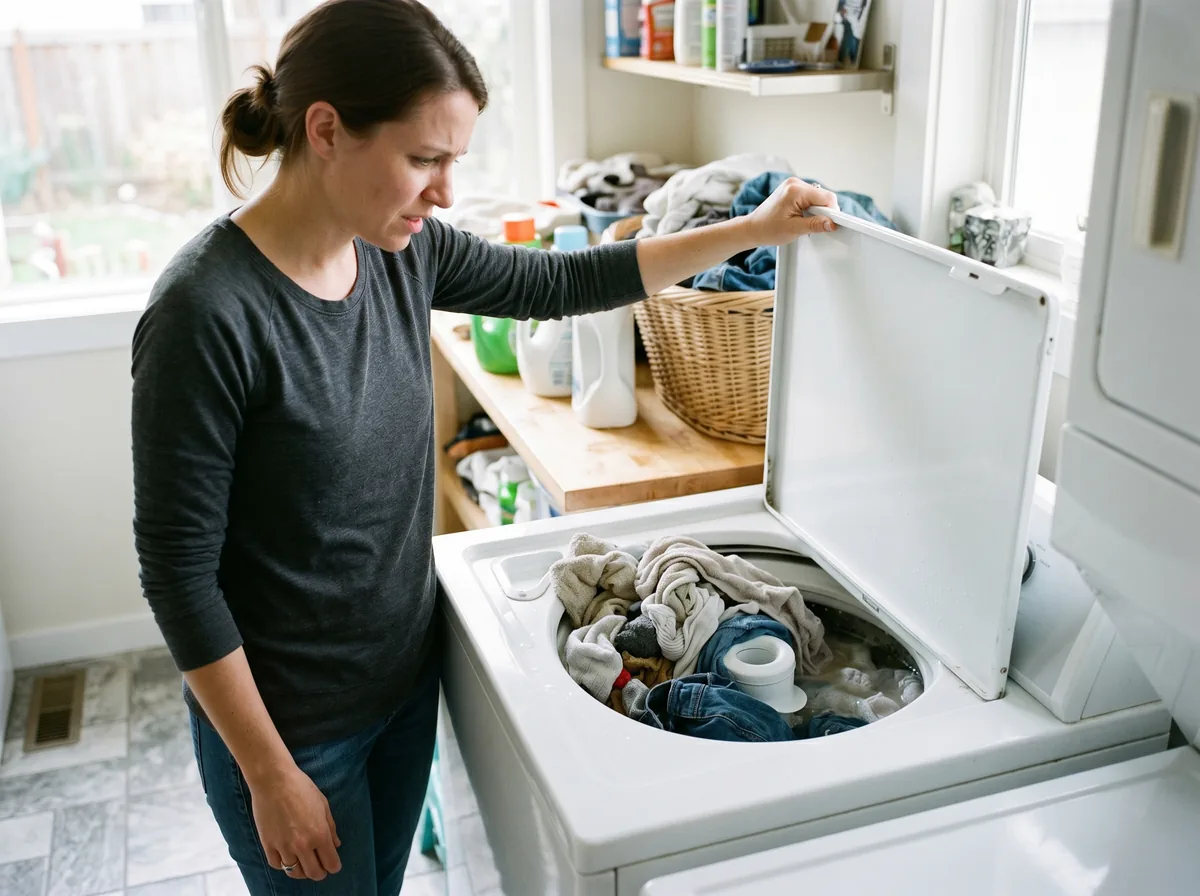
Before you assume the worst, rule out the easy stuff. Most “broken” washers we are called to are actually fine machines tripped up by a small setup issue. Work through these in order.
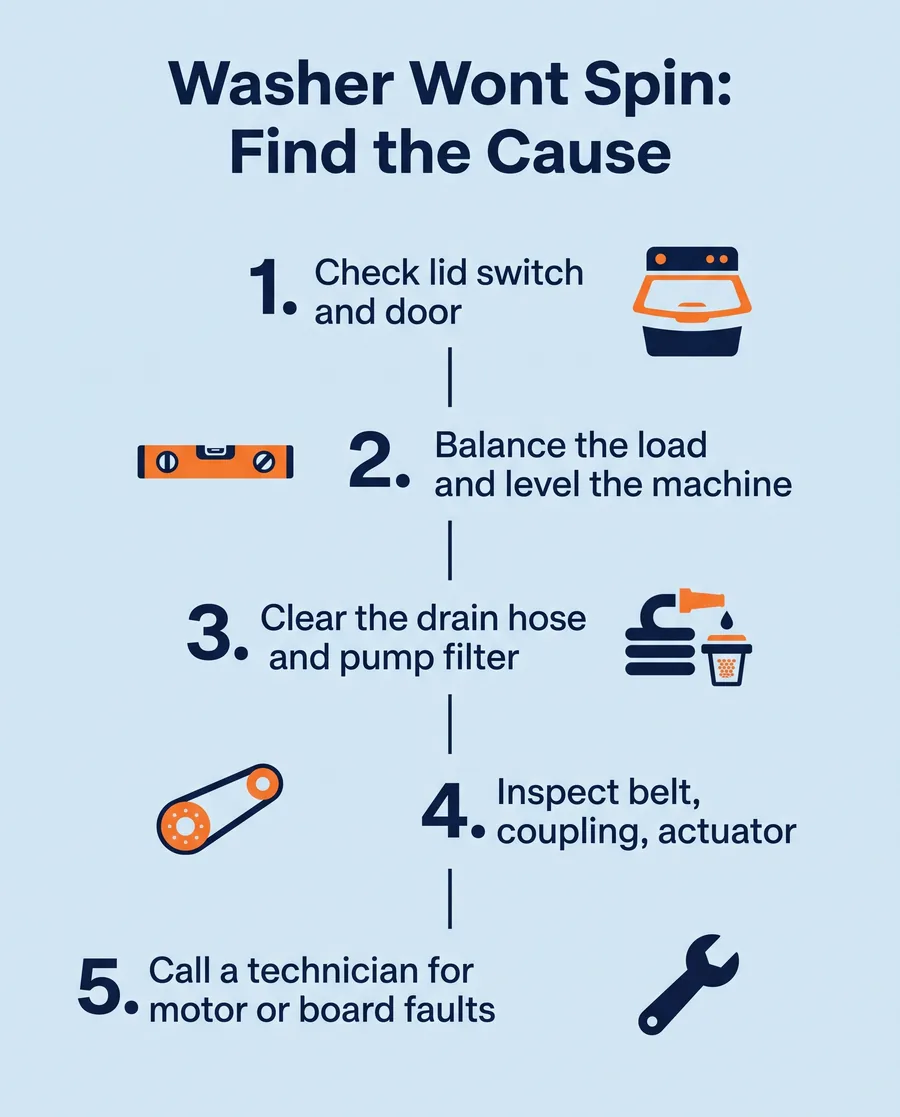
- Check the lid switch or door lock. A top loader will not spin if it does not believe the lid is shut. Press the lid down firmly and listen for a click. On a front loader, make sure the door is latched and the seal is clear of stray socks.
- Redistribute the load. Open the machine and spread the laundry evenly around the drum. A wet duvet bunched on one side will stop the spin every time.
- Make sure the washer is level. If it rocks, the machine senses the imbalance and refuses to spin fast as a safety measure. Adjust the feet until it sits solid.
- Cut back the detergent. Too many suds confuse the sensors and stop the drain. Run a rinse-only cycle to clear excess foam.
- Try a reset. Unplug the washer for one minute, then plug it back in. A glitchy control board sometimes just needs to reboot.
Pro tip: run a drain and spin only cycle
Most Whirlpool models have a “drain and spin” setting. Run it on an empty drum. If the washer drains and spins perfectly empty, your problem is almost certainly load balance or too much water from a slow drain, not a dead motor. If it still will not spin empty, the fault is mechanical and you are now narrowing it down fast.
Why an unbalanced load stops the spin
This is worth its own section because it accounts for a huge share of the washers we are called out to that were never actually broken. Modern Whirlpool washers have a sensor that detects when the drum is wobbling. To protect the cabinet, the bearings, and your floor, the machine slows or cancels the high-speed spin rather than shaking itself across the laundry room.
Bulky single items are the usual culprit: one bath mat, a hoodie with a heavy front pocket, or a single set of jeans. The fix is to add a few towels to balance the drum, or to pause and rearrange mid-cycle. If the washer has always struggled with balance, worn suspension rods or shock absorbers may be the deeper cause, and that is a job for a technician.
Did you know? A spin can hit 1,000 RPM or more
The final spin on many washers reaches between 800 and 1,200 revolutions per minute. At that speed even a slightly off-centre load creates enormous force, which is exactly why the machine plays it safe and backs off when it senses a wobble. It is not being fussy. It is protecting itself from real damage.
Drain problems that block the spin cycle
Here is a fault people often misread. A Whirlpool washer will not start its fast spin until it has pumped the water out. So if the drain is blocked, the symptom looks exactly like a spin failure: the cycle stalls and the clothes stay wet. Before you spend money on spin parts, check the drain path.
- The drain hose. Look for a kink behind the machine or a clog where it enters the standpipe. A folded hose is a five-second fix.
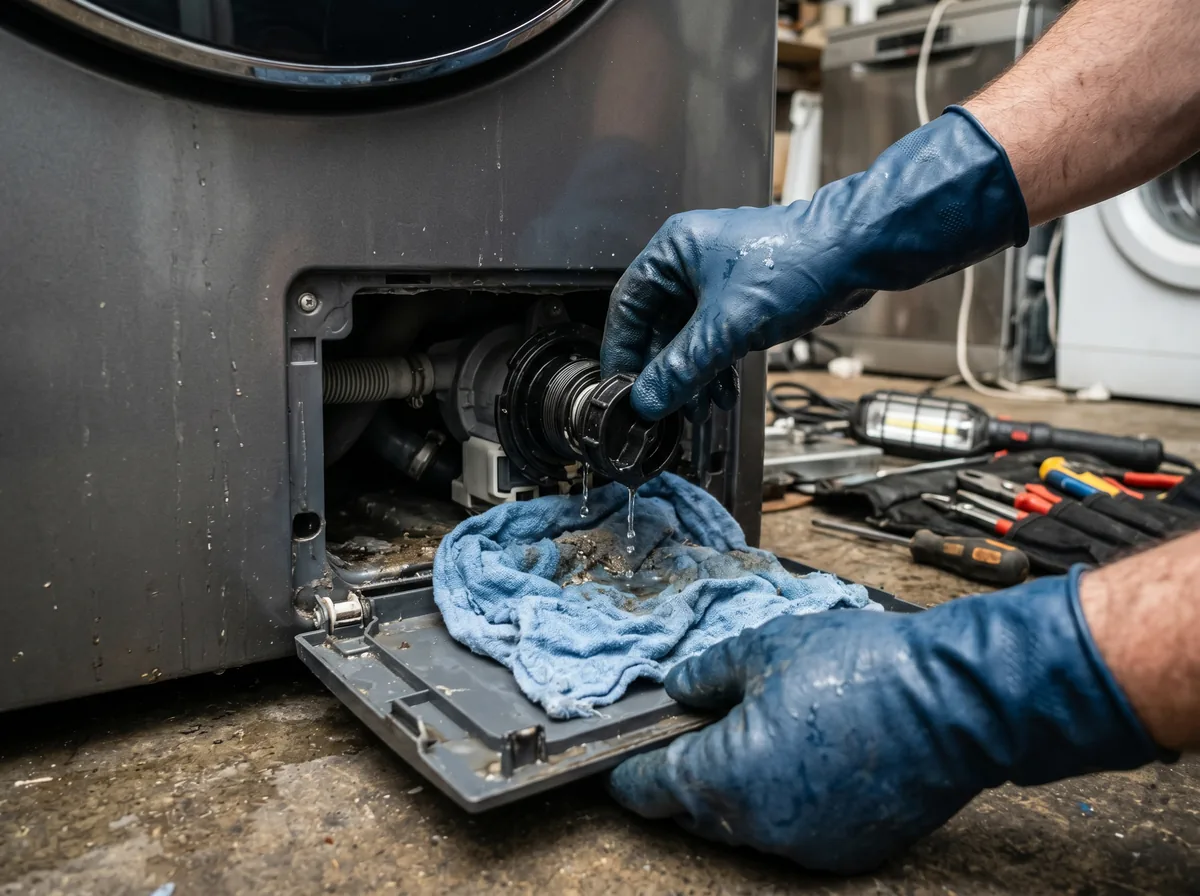
- The drain pump filter. Many front loaders have an access panel at the bottom front. Coins, lint, and hairpins collect there and choke the pump. Have a towel ready, because water will spill out.
- The drain pump itself. If you hear a humming but no water moves, the pump may have failed or have something jammed in the impeller.
Red flag: standing water that will not pump out
If the drum holds water that the machine cannot pump away, do not keep running cycles in the hope it clears. You can overflow the unit or burn out a struggling pump. Switch the washer off, bail out as much water as you can, and either clear the filter yourself or book a repair. A failed drain pump left running can turn a modest fix into a flooded floor.
The parts that fail on Whirlpool washers
If you have cleared the easy stuff and the washer still will not spin, you are into wear-and-tear territory. These are the components that genuinely fail on Whirlpool machines, roughly in order of how often we replace them. Diagnosing the exact one usually needs a meter and the machine partly open, so this is where most people hand it over.
- Motor coupling (top loaders). A small rubber-and-plastic part that links the motor to the transmission. It is designed to fail before more expensive parts do, so a worn coupling is common and relatively cheap to replace.
- Drive belt (front loaders). A stretched or snapped belt means the drum simply will not turn under power. A clear sign is a drum that spins freely by hand but does nothing during the cycle.
- Lid switch or door lock assembly. An electrical part that tells the washer it is safe to spin. When it fails, the machine acts as though the lid is open even when it is shut.
- Shift actuator or splutch. On many newer top loaders this part shifts the washer between wash and spin modes. A failed actuator leaves the drum stuck in wash.
- Drive motor or control board. The least common but most serious. If the motor or the board that runs it has failed, the repair cost climbs and the repair-or-replace question comes into play.
What a Hamilton washer repair costs in 2026
Pricing note: The figures on this page reflect typical market rates in Hamilton and the surrounding area as of 2026. What you actually pay depends on the make and age of the appliance, the parts involved, and how easy the unit is to access. Always ask for a written quote before approving a repair.
Cost is the question everyone asks once the simple fixes are ruled out. The ranges below are typical starting points for Hamilton homes in 2026, meant to help you sanity-check a quote rather than serve as a firm price. For a fuller breakdown, see our guide to appliance repair costs in Hamilton.
| Repair | Typical Hamilton range (2026) | Notes |
|---|---|---|
| Lid switch or door lock | $150 to $280 | Common, quick fix |
| Motor coupling (top loader) | $180 to $320 | Designed-to-fail part, often affordable |
| Drive belt (front loader) | $170 to $300 | Quick once accessed |
| Drain pump | $200 to $380 | Includes clearing blockages |
| Shift actuator | $200 to $360 | Common on newer top loaders |
| Drive motor or control board | $350 to $650+ | Repair-or-replace territory |
A good rule of thumb: if the repair costs more than half the price of a comparable new washer and the machine is over eight years old, replacement starts to make sense. Below that, a repair almost always wins, especially on well-built units.
When to stop and call a pro
There is no shame in tapping out. Some jobs are simply not worth the risk or the time. Call a technician when:
- The washer will not spin even on an empty drain-and-spin cycle.
- You hear grinding, banging, or burning smells during the spin.
- Water is leaking from the base or pooling under the machine.
- The drum has play in it, rocks, or makes noise when you turn it by hand.
- You would need to remove the cabinet or pull the unit out to reach the part.
We service every major brand, and Whirlpool is one of the most common we see. If your machine fits any of the cases above, our Whirlpool appliance repair team in Hamilton can diagnose it on the first visit and carry the most common parts on the van.
Sources and further reading
- Whirlpool, “Reasons your washing machine is not spinning” (manufacturer support guidance).
- Max Appliance Repair Hamilton, in-house service data and 2026 Hamilton-area pricing observations.
- Bens Appliances and Junk, “Whirlpool washer will not spin: how to test and fix it” (video, embedded above).
Frequently asked questions
Why does my Whirlpool washer fill and drain but not spin?
This usually points to one of three things. The lid switch or door lock may have failed, so the washer thinks the lid is open and refuses to spin for safety. The load may be unbalanced, which makes the machine slow or cancel the spin to protect itself. Or, on a top loader, the motor coupling or shift actuator may be worn. Start by pressing the lid firmly to test the switch, then redistribute the load and run a drain-and-spin cycle on an empty drum. If it still will not spin empty, the cause is mechanical and worth a technician’s diagnosis.
Can I fix a Whirlpool washer that will not spin myself?
Some of it, yes. Levelling the machine, redistributing the load, clearing the drain hose, cleaning the pump filter, and resetting the control board are all safe DIY checks that fix a large share of spin complaints. What you should not attempt is replacing the motor coupling, drive belt, actuator, or control board unless you are confident and the washer is fully unplugged. Those jobs involve partly dismantling the cabinet and working near electrical parts. If you are not comfortable, call a professional rather than risk injury or a bigger repair bill.
Is it worth repairing a washer that will not spin, or should I replace it?
It depends on the part and the age of the machine. A lid switch, drain pump, belt, or motor coupling is usually a clear repair, since the parts are affordable and the washer has plenty of life left. A failed drive motor or control board on a machine over eight to ten years old is closer to a coin flip. As a guideline, if the repair costs more than half the price of a comparable new washer and the unit is aging, replacement makes sense. Below that threshold, repair almost always wins. A technician can give you the honest number before you decide.
How long should a Whirlpool washer last?
With normal household use and basic care, a Whirlpool washer typically lasts ten to fourteen years. Front loaders and top loaders are similar in lifespan, though front loaders need their door seal kept clean to avoid odour and mould. You stretch that lifespan by not overloading the drum, using the right amount of high-efficiency detergent, levelling the machine, and clearing the pump filter once or twice a year. A washer that will not spin is not automatically at the end of its life. More often it is a single worn part that is well worth replacing on an otherwise healthy machine.
The verdict
A Whirlpool washer that will not spin is rarely the disaster it looks like at the open lid. In most homes the cause is a small one: an unbalanced load, an unlevel machine, too much detergent, or a blocked drain. Work through the quick checks first, then the drain, and only then start thinking about parts. If the machine will not spin on an empty drain-and-spin cycle, you have a genuine mechanical fault, and that is the moment to bring in a technician rather than keep guessing.
Download the free quick guide
Keep our printable step-by-step checklist by the laundry room so you can run the quick checks the next time the spin quits.
Washer still sitting in a puddle in Hamilton?
We have been keeping Hamilton-area laundry rooms running for years, with same-day service across the city and the surrounding towns. Book washing machine repair in Hamilton, get help with your Whirlpool appliance, or contact our team to book a visit. We carry the most common spin parts on the van so a lot of repairs are done in one trip.
