

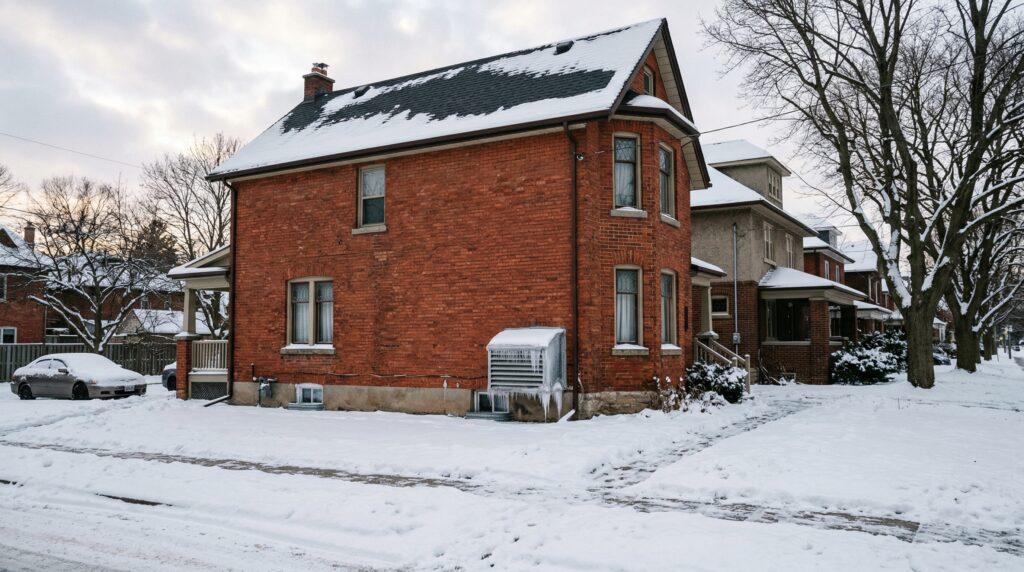
Hamilton’s housing stock leans old. Walk through Westdale, Kirkendall, Crown Point, or the lower city near Locke Street and you find tens of thousands of homes built between 1910 and 1955, most with brick exterior walls and basements that were never designed for a modern electric dryer. When the temperature drops below freezing in January and February, those vents become the single biggest cause of dryer repair in Hamilton calls our Hamilton crew runs all winter. The clothes take two cycles to dry, the laundry room smells damp, and sometimes the dryer just stops heating entirely. Here is exactly what is going wrong, how to diagnose it without a technician, and when the problem is serious enough to call one.
Why old Hamilton brick homes are hard on dryer vents
A modern dryer pushes between 150 and 200 cubic feet of air per minute through its vent. That air leaves the house carrying every bit of moisture from your wet clothes, plus stray lint that escaped the lint trap. In a 1925 Hamilton brick home, the vent route is usually long, often runs through unconditioned basement space, frequently has more bends than the manufacturer allows, and exits through a brick wall rather than a modern siding penetration. Each of those factors makes winter performance worse.
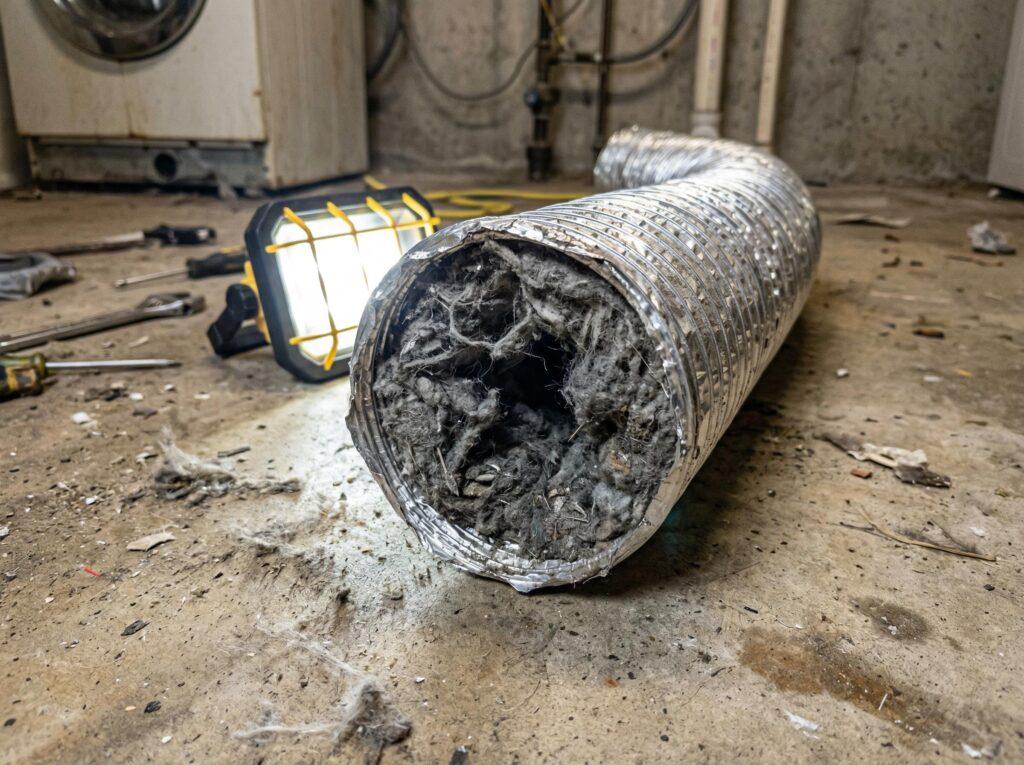
The vent route inside an older Hamilton home commonly includes a horizontal run across joists, an elbow upward through a sill plate, and an exterior brick penetration with an old-style louvered cap. In summer, the system limps along. In January, with outdoor temperatures at minus 10 Celsius, three things happen at once. First, the warm wet exhaust hits cold metal duct and condenses, depositing moisture inside the run. Second, the moisture grabs lint and turns it into mat-like clumps that line the duct. Third, the exterior flap freezes partly closed because the morning load shut down before the moisture cleared, and ice crystallized along the flap’s hinge.
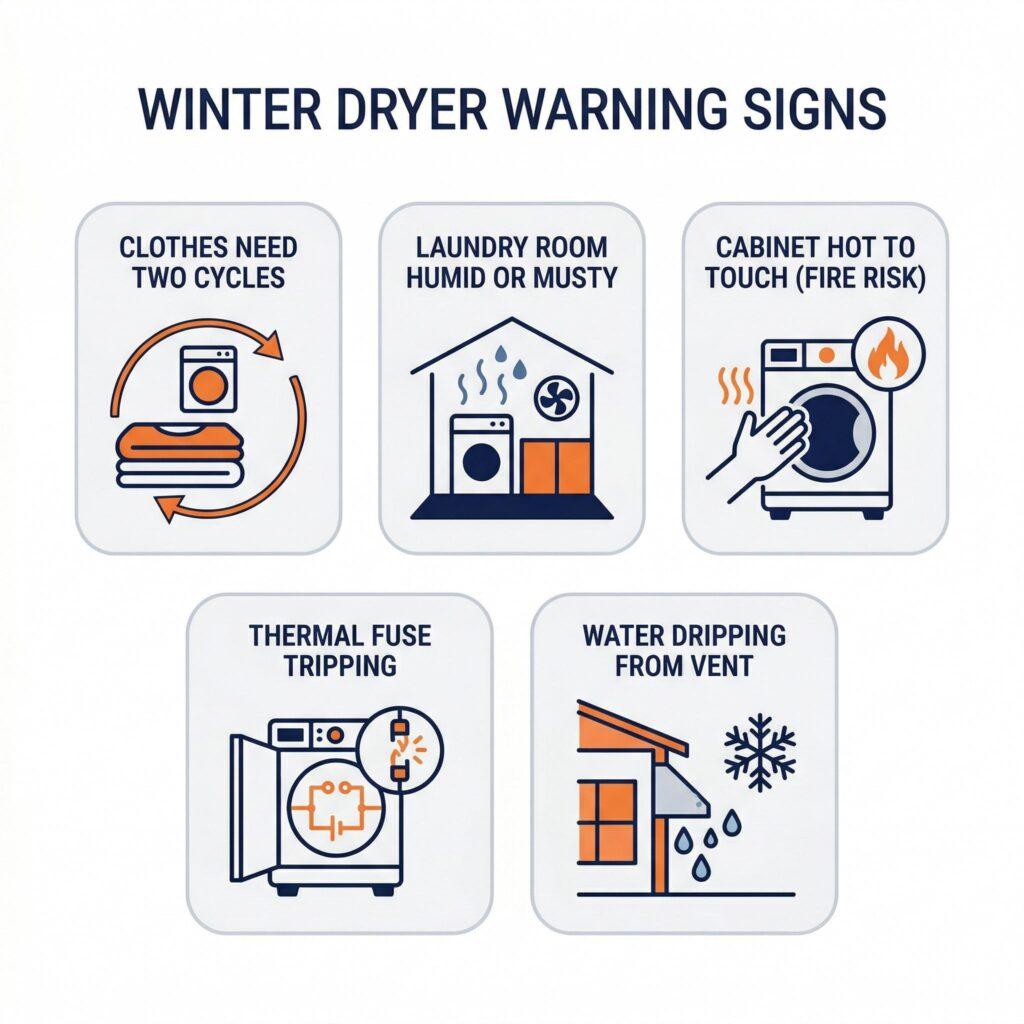
The five winter symptoms our Hamilton techs see most
- Clothes take two cycles to dry. Restricted airflow because of lint build-up or a partly frozen exterior flap.
- Laundry room is humid or smells musty. Vent backflow. Moist exhaust is finding its way back into the basement instead of leaving the house.
- Dryer is hot to touch on the outside cabinet. Heat is not exhausting and is building inside the unit. This is the highest fire-risk symptom and warrants immediate service.
- Thermal fuse keeps tripping. The dryer shuts down mid-cycle and will not restart. Almost always vent restriction triggering the safety fuse.
- Visible water dripping from the vent or basement ceiling near the run. Condensation building up inside an uninsulated horizontal duct.
What you can check yourself in 20 minutes
Step 1: Look at the exterior vent cap from outside
Walk around the house and find the exterior dryer vent. In old brick Hamilton homes, it is usually within 8 feet of ground level, often along a side wall or rear wall. If the louvers are visibly clogged with lint, frozen shut, or covered in snow drift, that is your problem. Clear the snow, gently break the ice off the louvers with a plastic scraper, and make sure all flaps move freely.
Step 2: Disconnect the vent at the back of the dryer and inspect
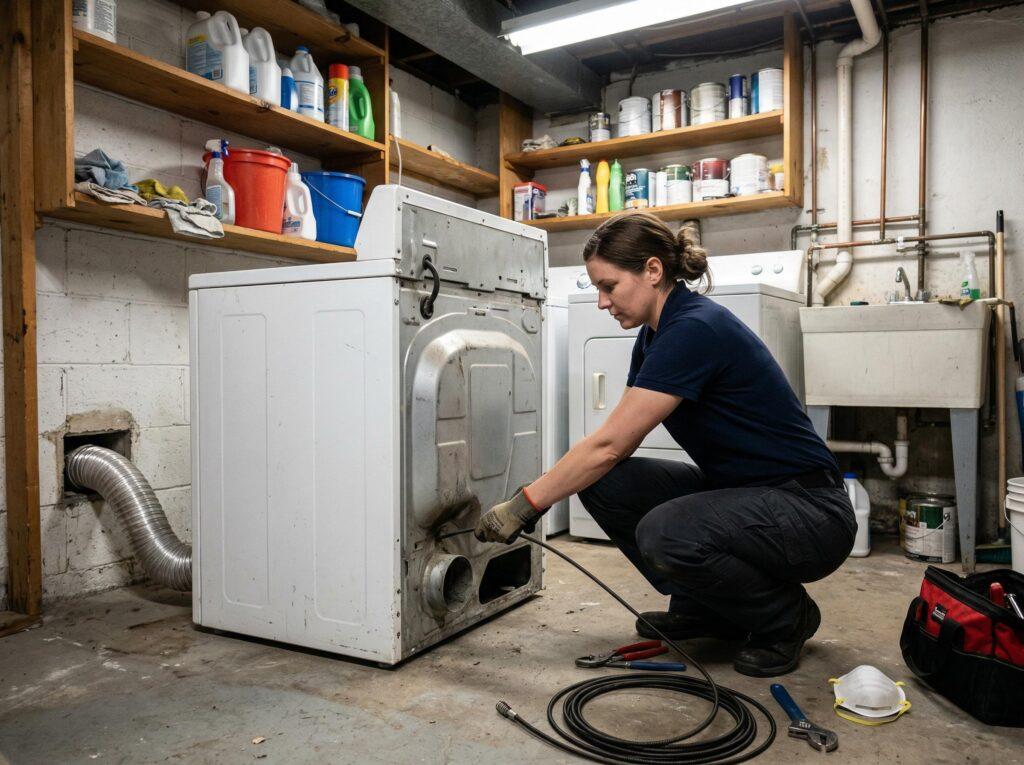
Pull the dryer out, unplug it, slide the vent clamp off, and look inside both ends. If you see a thick mat of lint within the first 2 feet, your vent has not been cleaned in well over a year and is the cause. A long flexible vent brush from any Hamilton hardware store costs about $25 and clears most residential vent runs.
Step 3: Test the dryer with the vent disconnected
With the dryer pulled out and the vent removed, run a 10-minute heated cycle and feel the airflow at the back of the dryer with your hand. Strong, hot airflow means the dryer itself is fine and the vent is the problem. Weak airflow means the dryer has an internal issue (bad blower wheel, failed thermal limiter, restricted lint trap housing) and you need a technician.
When to call a Hamilton appliance technician
Call right away if any of the following are true: the dryer cabinet is hot to the touch on the outside, the thermal fuse has tripped more than once, you smell anything burning, the dryer has been running over an hour for a single load, or you cannot get the vent cleared yourself. The Canadian Association of Fire Chiefs lists clogged dryer vents as one of the most common preventable house-fire causes in Canada. The Natural Resources Canada dryer efficiency guidance guidance reinforces the same point: a clean vent runs cooler, dries faster, and uses 20 to 30 percent less electricity.
What a winter Hamilton dryer service call usually includes
When our Hamilton techs run a winter no-heat or long-cycle dryer call, the visit typically covers:
- Full vent inspection from dryer to exterior cap, including ice and frost removal
- Vent brush clean-out of the entire run
- Replacement of crushed or kinked transition hose (these are 90 percent of the problem on dryers tucked into Hamilton basement closets)
- Thermal fuse and high-limit thermostat test, replacement if tripped
- Blower wheel inspection (cracked blower wheels are common on units over 8 years)
- Heating element resistance test on electric models
- Gas valve and igniter test on gas models (TSSA-licensed techs only, see Technical Standards and Safety Authority (TSSA))
- Exterior cap replacement if the original louvered cap is damaged or freezes consistently
Most Hamilton winter dryer calls run between $180 and $380 in 2026 depending on parts. Vent-only cleaning with no parts replacement is usually $140 to $200.
Permanent fixes for old Hamilton brick homes
Three upgrades remove the winter problem entirely:
- Replace flexible foil vent with rigid metal duct. Smooth interior, fewer bends, far less lint accumulation. Mandatory under most modern building codes anyway.
- Install a damper-and-hood exterior cap rated for cold climates. Plastic-and-spring designs do not freeze the way old louvered caps do.
- Insulate the horizontal vent run if it crosses unconditioned basement. Eliminates condensation and the lint mat that follows.
The combined upgrade in a typical Hamilton brick home runs $300 to $700 installed and removes the winter dryer issue permanently.
Frequently asked questions
How often should a Hamilton dryer vent be cleaned?
Once a year for an average household. Twice a year if you do more than 6 loads a week or if anyone in the home has allergies. After every winter if your home is over 80 years old with original brick wall penetration.
Can I use the leaf blower trick on my dryer vent?
Yes, with caution. Disconnect the dryer end, take the vent cap off the outside, and blow from the dryer end out. Wear safety glasses. The technique works for light lint but does not handle the wet matted lint that forms in winter Hamilton vents.
Is a heat pump dryer better for old Hamilton homes?
Heat pump dryers do not need an exterior vent at all. They condense moisture into a tray or drain. For a Hamilton homeowner facing repeated winter vent issues in an old brick house, a heat pump dryer eliminates the entire problem. The trade-off is a longer dry cycle and higher upfront cost.
My dryer is gas. Does winter affect it differently?
Gas dryers are more sensitive to vent restriction than electric, because back-pressure can affect the burner. Combustion safety matters more, and only a TSSA G2 or G3 licensed technician can legally service the gas valve, igniter, or burner assembly.
Why does the laundry room smell bad in winter?
Because the vent is partially blocked and exhaust is leaking back into the room. That exhaust carries water vapour, lint dust, and (in gas dryers) trace combustion byproducts. Solve the vent and the smell goes with it.
Book a Hamilton dryer service call
If your dryer is taking two cycles, the cabinet feels hot, the thermal fuse has tripped, or the vent looks frozen from outside, do not keep running it. Continued use of a restricted dryer is the leading cause of dryer-related house fires in Canada. Our Hamilton techs run winter vent and dryer calls across Stoney Creek, Ancaster, Dundas, Hamilton Mountain, and the lower city six days a week. book a Hamilton service call and we will diagnose, clean, and repair on the same visit.
