


You open the door right after a wash cycle ends, and the glass and ceramic items on the top rack come out warm and dry, while the plastic containers underneath are still beaded with water. This outcome is not a mechanical fault or a broken heating element. If your Bosch dishwasher leaves plastics wet, it is due to condensation drying physics. Condensation drying relies on items retaining wash heat long enough for surface water to evaporate, and plastic loses heat far faster than glass, ceramic, or stainless steel.
Understanding this mechanism helps you adjust how you load your machine and optimize settings to achieve significantly drier results across every load.
Why Your Bosch Dishwasher Leaves Plastic Dishes Wet
Bosch dishwashers dry through condensation rather than an exposed heating element at the bottom of the tub. The final rinse cycle uses heated water to bring the entire load up to temperature. As heat radiates outward afterward, the stainless steel tub walls cool faster than the dishes inside. According to Bosch’s guidance on condensation drying, moisture in the air condenses onto the cooler tub walls rather than staying on dense dishes like glass and porcelain, which hold their temperature much longer.
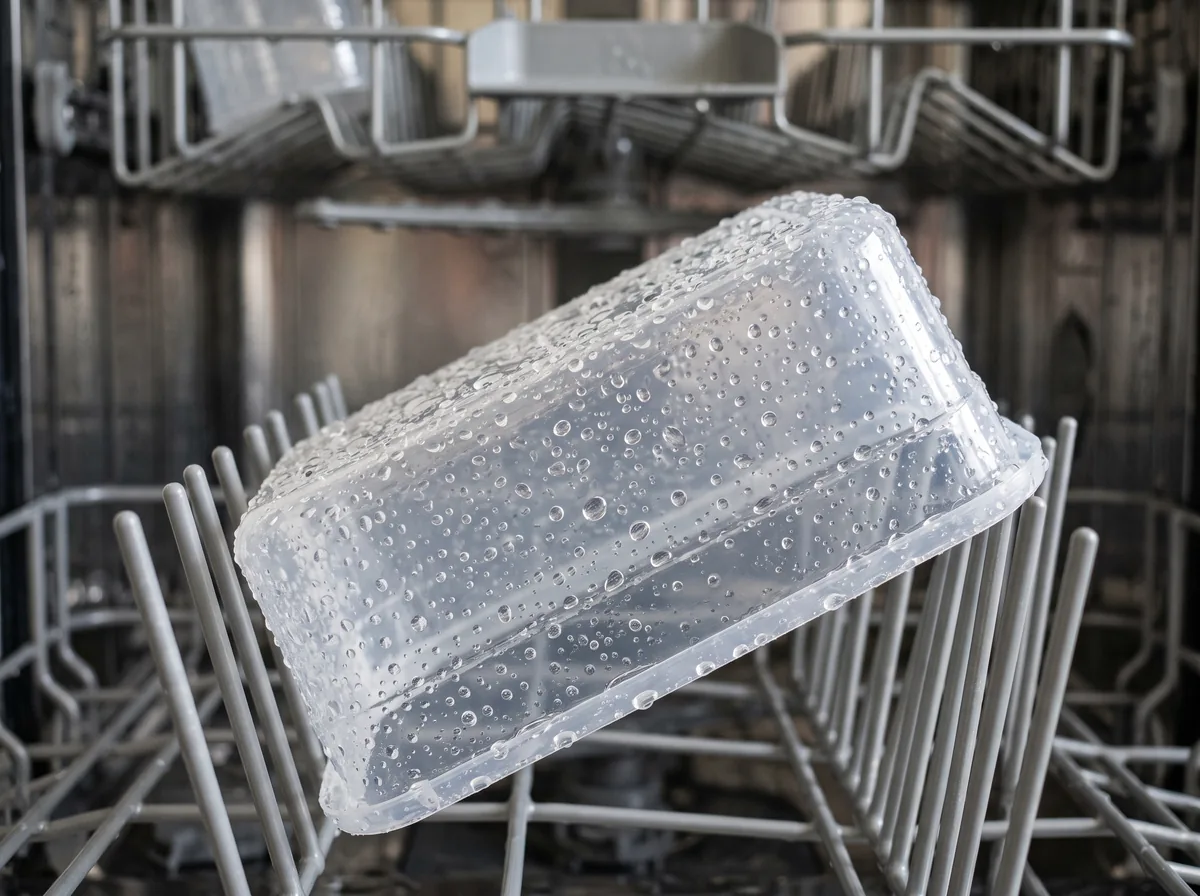
Because plastic has low thermal mass, it cannot retain heat effectively during the final rinse. When a Bosch dishwasher leaves plastics wet, it reflects a material limitation rather than an appliance defect. Synthetic plastics are simply the hardest items to dry using standard condensation, which is why features like CrystalDry exist on higher-end models.
People Often Ask
Would switching dishwasher brands fix this? Probably not. Most energy-efficient dishwashers that avoid bottom heating elements encounter identical drying limits with plastic Tupperware and storage containers. This design protects plastic items from melting or warping while saving energy.
Common Symptoms & Causes
Not all drying issues share the same cause. Use this breakdown to identify whether your drying results stem from normal physics or a setting adjustment:
| What You Are Seeing | Likely Cause | What Usually Helps |
|---|---|---|
| Only plastic containers and lids are wet | Standard condensation drying limits | Add rinse aid, select Extra Dry, tilt dishes |
| Everything is wet, including glass and ceramic | Empty rinse aid dispenser or disabled dry cycle | Refill rinse aid dispenser and enable heat options |
| Water pooling in the tops of containers | Concave items loaded completely flat | Angle bowls, cups, and lids downward on racks |
| Cloudy film left on dishes after drying | Hard water mineral buildup | Adjust rinse aid dosage and run cleaner cycles |
| Standing water pooling at the tub bottom | Drainage blockage or failed drain pump | Clean the filter or schedule professional service |
How to Get Drier Plastics
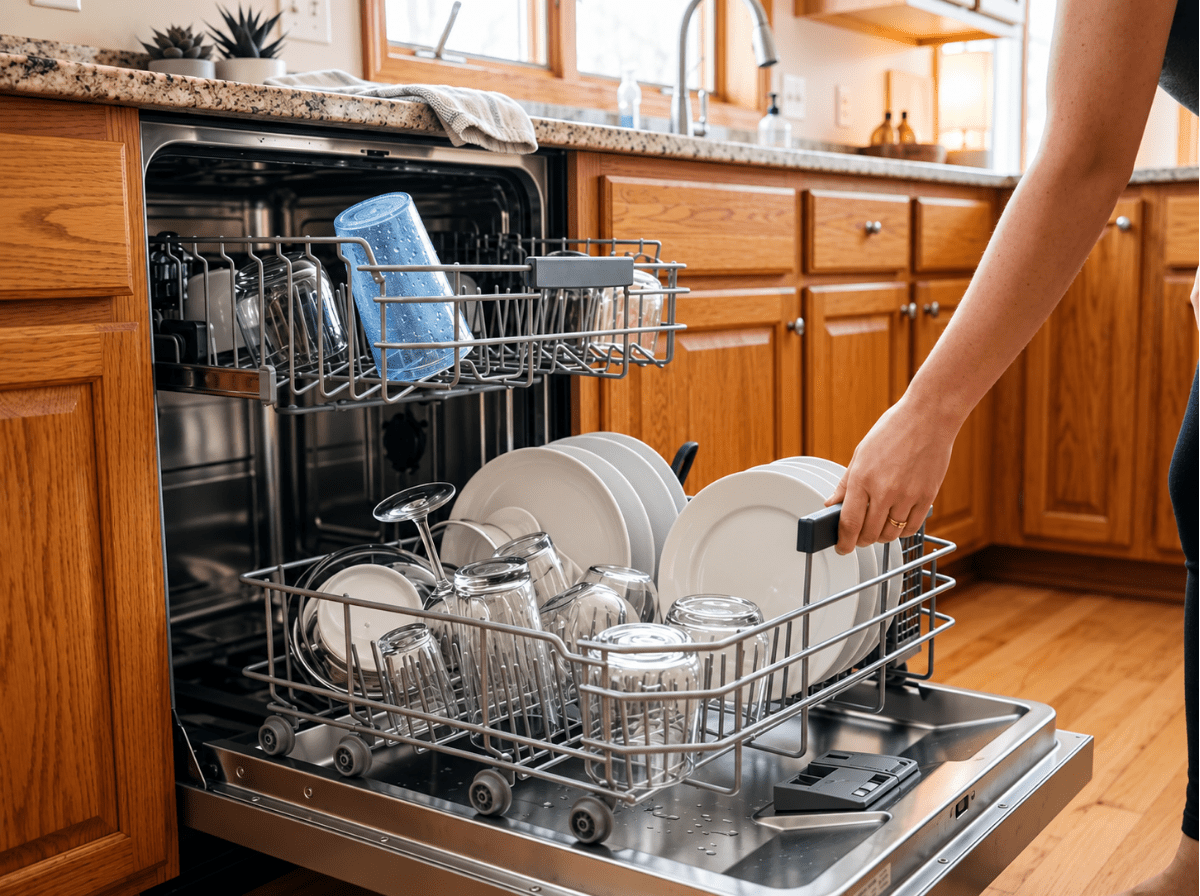
When a Bosch dishwasher leaves plastics wet after standard cycles, adjusting loading technique and cycle settings can improve performance dramatically. Following Bosch’s recommended drying tips helps ensure water sheds effectively before the cooling phase begins:
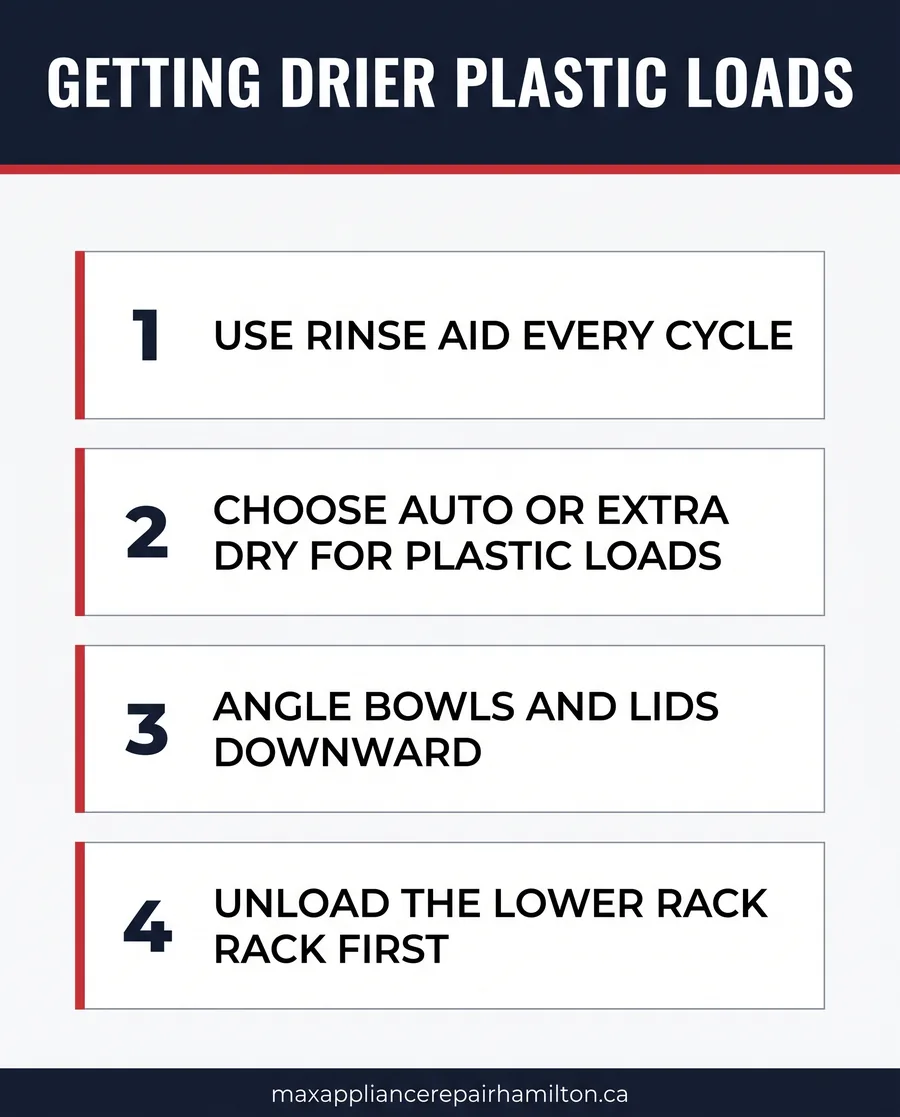
- Use Liquid Rinse Aid Regularly: Rinse aid reduces the surface tension of water, allowing it to sheet off plastic surfaces instead of forming droplets.
- Select the Auto or Heavy Cycle: Auto settings optimize water temperature and cycle duration based on load demands.
- Enable Extra Dry or Sanitize: These options increase final rinse water temperatures, giving plastics more thermal energy to evaporate surface water.
- Unload the Lower Rack First: Unloading bottom items first prevents pooled water on upper racks from spilling onto dry dishes below.
- Angle Concave Items: Position plastic lids, bowls, and containers at a steep slant so water runs off naturally.
Pro Tip
Rinse aid is essential for condensation drying. It alters water behavior during the final rinse so that droplets sheet off plastics automatically, leaving far less standing moisture to evaporate.
When to Call a Professional
If your Bosch dishwasher leaves plastics wet alongside glass, ceramics, and metal utensils, the issue extends beyond basic thermal limits. System failures or improper cycle configurations may be actively suppressing overall drying performance.
Red Flag
If glassware and ceramic plates remain cold and soaked at cycle completion, or if standing water remains in the sump filter basin, your appliance may have a heating element issue, faulty rinse aid dispenser, or drain pump obstruction. Verify rinse aid levels and cycle settings first before scheduling professional diagnostics.
In addition, mineral deposits from local water supplies can coat interior sensors and dishware. Reviewing how hard water affects dishwasher components can help you distinguish mineral scale from actual drying system malfunctions.
Good to Know
This article outlines standard condensation drying principles and troubleshooting options for Bosch dishwashers. Water hardness, cycle configurations, and mechanical condition vary by household. Persistent heating or drainage issues should be evaluated by a trained technician.
Download the Free Quick Guide
A printable checklist covering simple loading adjustments, cycle settings, and maintenance checks for drier dishes.
Frequently Asked Questions
Why do plastic items stay wet while glass and ceramic come out dry?
Plastic has low thermal density, meaning it cools down almost immediately after the hot rinse cycle finishes. Glass and ceramic retain heat much longer, allowing water on their surfaces to evaporate and condense onto the cooler stainless steel tub walls instead.
Does rinse aid actually help dry plastic dishes?
Yes. Rinse aid breaks the surface tension of water, preventing droplets from forming on hydrophobic plastic surfaces. This causes water to sheet off easily during the final rinse cycle, leading to significantly drier results.
Should I replace my dishwasher if plastics never dry completely?
Replacing the machine is usually unnecessary. Most modern, energy-efficient dishwashers use condensation drying without exposed heating elements to prevent melting plastic items. Utilizing rinse aid and enabling Extra Dry options yields better results without replacing the unit.
When does a wet plastic issue indicate a real mechanical problem?
If glass, ceramic, and metal items also come out soaking wet, or if water remains pooled in the bottom of the dishwasher tub after the cycle ends, your machine may have an active heating circuit, dispenser, or drainage pump fault requiring inspection.
If your Bosch dishwasher leaves plastics wet consistently, follow this simple checklist:
- Fill the rinse aid dispenser and set the dosage level appropriately.
- Select the Auto or Heavy cycle with Extra Dry enabled for plastic loads.
- Angle concave containers downward and unload the bottom rack first.
If all items remain cold and wet or water fails to drain, expert assistance can resolve underlying component issues. When troubleshooting steps do not resolve the issue, contact our service team to schedule an inspection.
