

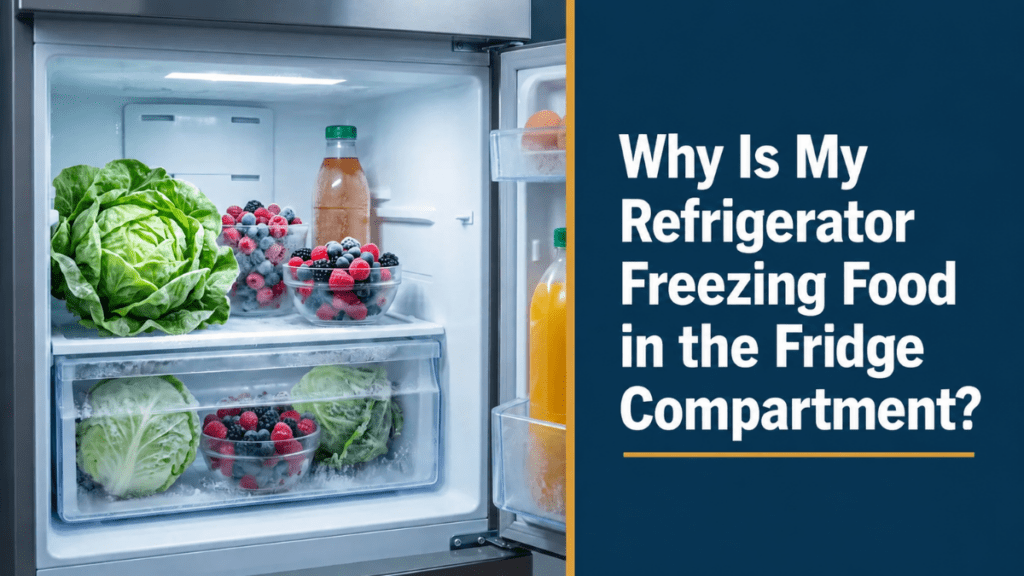
You reach for the lettuce and it crunches with ice. The milk has a frozen slushy layer, and the berries at the back are solid. A refrigerator freezing food in the fresh-food compartment is oddly common, and it is almost always a control or airflow problem rather than a broken appliance. In most cases, you can trace the cause and often fix it before needing a refrigerator repair visit in Hamilton. The trick is knowing which component is letting too much cold air enter the wrong compartment.
This guide walks through why your fridge section freezes items, the safe checks you can do today, and when a faulty thermistor, damper, or control board requires a technician.
What causes a refrigerator freezing food in the fresh-food section
Your fridge and freezer usually share a single cooling system. Cold air generated in the freezer enters the fridge through a vent controlled by an air damper, while temperature sensors tell the control board when to stop cooling. When you notice your refrigerator freezing food, something in that system is supplying too much cold air or misreading the interior temperature. The most common causes include:
- A low temperature setting: A thermostat set too cold will freeze produce and liquids quickly.
- A faulty thermistor or sensor: If the sensor misreads the fridge as too warm, the compressor keeps running, leading to a refrigerator freezing food continuously.
- A stuck air damper: The flap metering cold air from the freezer can jam open, flooding the fridge compartment with sub-zero air.
- Blocked air vents: Packing items against the rear vents channels cold air directly onto those items, freezing them solid.
- A worn door gasket or empty compartment: Worn seals let warm air in (causing overcooling), while an empty fridge allows cold air to pool rapidly.
- A failing control board: A malfunctioning board can run the cooling cycle much longer than necessary.
Quick take
Start by adjusting the temperature setting and clearing the air vents. If the settings are correct and vents are clear, but your refrigerator freezing food remains an issue, suspect a faulty thermistor or air damper that needs professional repair.
Why the back and bottom freeze first
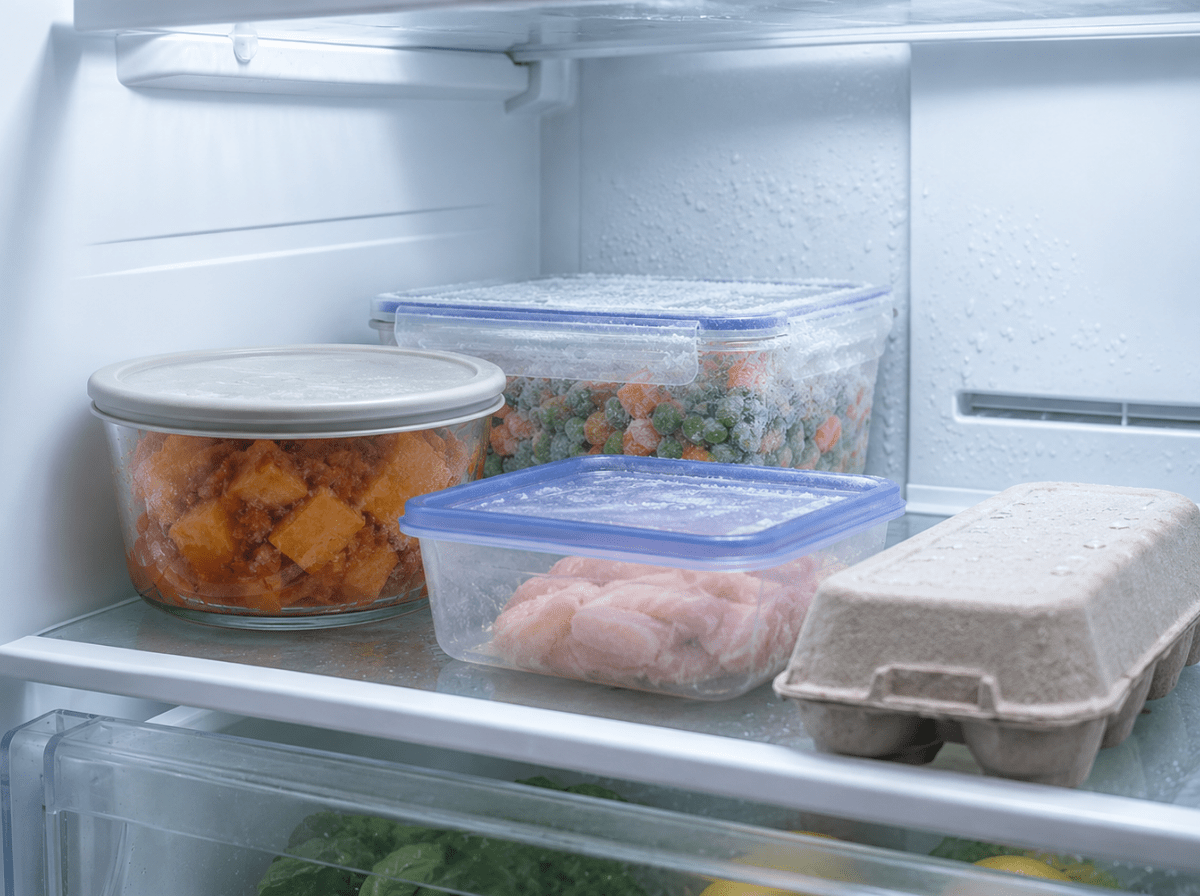
Identifying where ice forms narrows down the diagnosis. Cold air typically enters near the top rear of the fridge and settles downward, making the back wall and lowest shelf the coldest areas. Consequently, leafy greens, items against the rear panel, and produce in the bottom crisper freeze long before items on door shelves.
This pattern isolates airflow issues. If only items near the rear vents freeze, poor food arrangement or a stuck damper is likely responsible. If items freeze uniformly throughout the compartment, including on the door, a faulty sensor or control board is usually signaling the compressor to run nonstop.
Did you know
An empty fridge freezes food faster than a full one. Without sufficient mass to absorb the cold, air temperatures drop rapidly during cooling cycles. Keeping a few containers or jugs of water in a sparsely filled fridge helps stabilize internal temperatures.
Safe checks you can do today
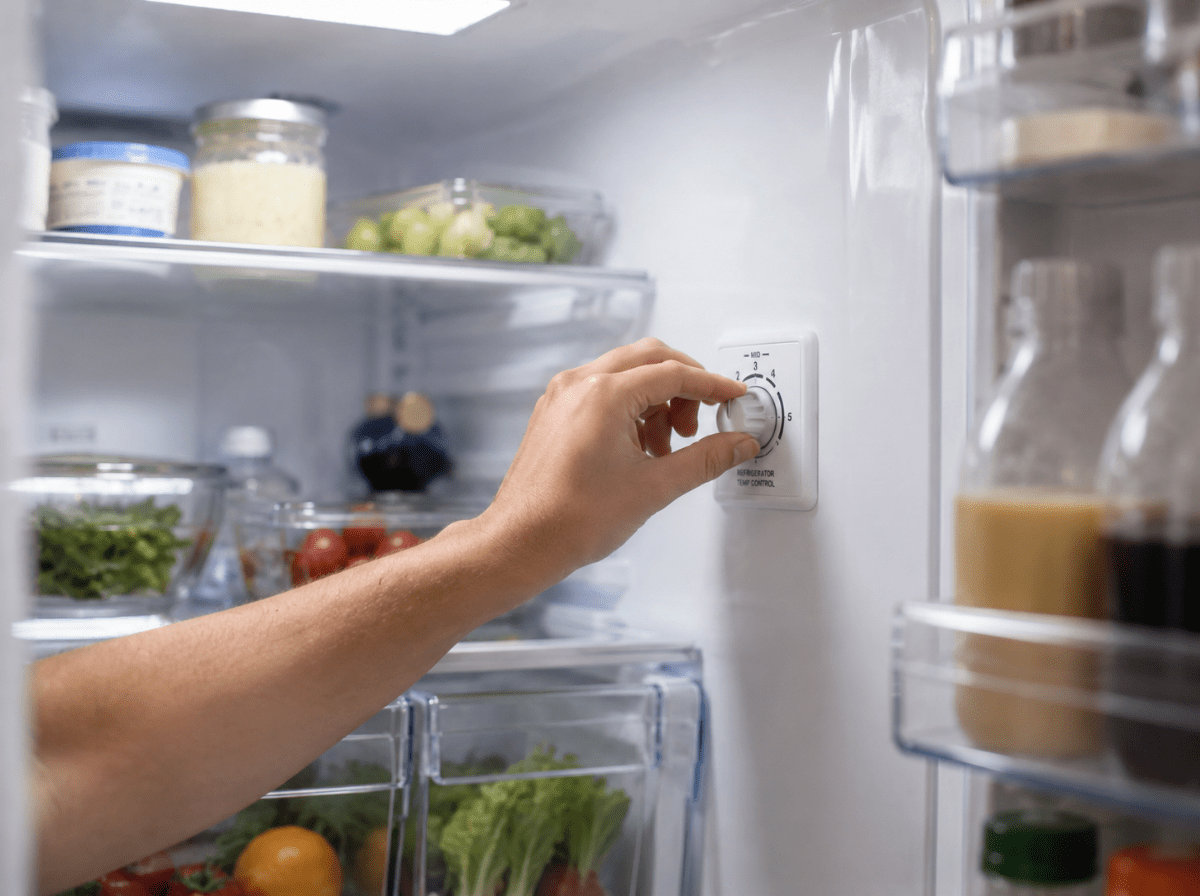
- Check the temperature setting: Aim for 3°C to 4°C (37°F to 40°F) in the fresh-food compartment. If it is set lower, adjust it up one step and wait 24 hours.
- Measure with a thermometer: Place a glass of water with an appliance thermometer on the middle shelf overnight to verify the exact temperature.
- Clear the air vents: Move items away from rear vents so cold air circulates evenly rather than blasting directly onto food.
- Maintain proper food load: Avoid overpacking or underpacking. Use water jugs to balance mass in an empty fridge.
- Inspect the door seal: Clean the gasket and test it with a piece of paper to ensure cold air is not leaking out, which causes the system to overcompensate.
- Wait 24 hours: Allow a full day after making adjustments for the temperature to stabilize.
- Call a professional if freezing persists: If items continue freezing despite correct settings, a faulty sensor, damper, or board requires expert repair.
Pro tip
Track your fridge’s performance for 24 to 48 hours. Note the temperature setting, frost locations, and thermometer readings. Showing this record to a technician helps pinpoint whether a stuck damper or sensor is responsible, often resolving the repair in a single visit.
Match the symptom to the likely cause
The table below summarizes common symptoms, probable causes, and estimated repair costs in the Hamilton area.
| What you see | Likely cause | DIY or pro? | Rough cost |
|---|---|---|---|
| Everything a little too cold | Setting too low | DIY: raise the setting | $0 |
| Only rear or vent items freeze | Food blocking the air vents | DIY: rearrange food | $0 |
| Freezes even at a normal setting | Faulty thermistor or sensor | Pro | $130 to $260 |
| Fridge runs very cold, damper open | Stuck air damper | Pro | $150 to $300 |
| Nearly empty fridge freezes food | Too little thermal mass | DIY: add water jugs | $0 |
| Cold all over, long cooling cycles | Failing control board | Pro | $200 to $420+ |
When to call a technician in Hamilton
If settings are correct, vents are clear, and your refrigerator freezing food issue continues, the failure involves an internal component such as the thermistor, air damper, or control board. These components require specialized tools and diagnostic testing to replace safely.
Addressing the issue promptly prevents excessive wear on the cooling system. If considering a replacement instead of a repair, reviewing ENERGY STAR guidelines can help evaluate replacement costs, though component repairs are generally much more cost-effective.
Download the free quick guide
A simple checklist for troubleshooting a refrigerator freezing food in the fridge compartment, covering basic fixes and professional options.
Download the free fridge-freezing troubleshooting checklist (PDF)
Frequently Asked Questions
If you have adjusted your settings, cleared air vents, and organized food properly but still experience issues, a professional diagnostic is recommended. Max Appliance Repair Hamilton provides expert service across Hamilton, Stoney Creek, Ancaster, Dundas, and Burlington. Book a service visit today to restore correct temperatures to your refrigerator.
